


Quick Summary
Live music works best at corporate events when the act matches the event’s purpose. Full bands suit dance parties and large galas, while solo artists and acoustic duos fit cocktail hours and dinners. Planners should book early and confirm venue requirements.
- Live music sets the mood before speeches and awards.
- Solo artists suit tight budgets and smaller rooms.
- Full bands need more space, power, and load-in time.
- Book early, especially for December and spring gala season.
- Share your playlist with the performer so sets blend smoothly.
Table of Contents
Why Live Music Works at Corporate Events
Live music turns a standard corporate function into something people remember. Event planners often find that the right performer changes the room within minutes, shifting guests from polite small talk to genuine conversation. The atmosphere matters as much as the agenda.
For most events, live entertainment does three things well. It sets the tone for the evening, it gives guests a shared experience to talk about afterward, and it fills gaps in the schedule, like cocktail hours and dinner breaks. Done right, it supports networking rather than competing with it.
The same principle applies across most events: an audience that feels engaged stays in the room longer and talks more.
- Sets the mood before speeches and awards
- Gives guests an easy conversation starter
- Keeps energy steady between program segments
- Adds a memorable element to the event
How to Choose Music That Fits Your Event’s Purpose
The best music choice starts with the event’s goal. A product launch needs energy and focus. A gala dinner calls for something more elegant and low-key. A team-building event may benefit from something interactive.
Ask a few simple questions before you book anyone:
- What is the main purpose of the event?
- How long will guests need entertainment?
- Is the room a ballroom, a lounge, or an outdoor space?
- How much conversation should the music support?
Matching these answers to the performer’s style makes a real difference. A loud, high-energy act can overwhelm a dinner conversation. A quiet background set may leave a company party feeling flat.
Comparing Live Music Act Types: Bands, Solo Acts, Duos and DJs
Live music options vary widely in size, cost, and feel. Here is a quick comparison to help you decide.
| Act Type | Best For | Typical Setup | Energy Level |
|---|---|---|---|
| Full band | Dance parties, large galas | Large stage, sound system | High |
| Solo artist | Cocktail hours, small receptions | Minimal setup | Low to medium |
| Acoustic duo | Dinners, networking events | Small footprint | Medium |
| DJ | Company parties, flexible playlists | Booth and speakers | High |
Full Bands and Party Bands
Full bands are often a good choice when dancing is the goal. They bring volume and variety. They also need more space, power, and load-in time, so check your venue early.
Solo Artists, Acoustic Duos and Jazz Trios
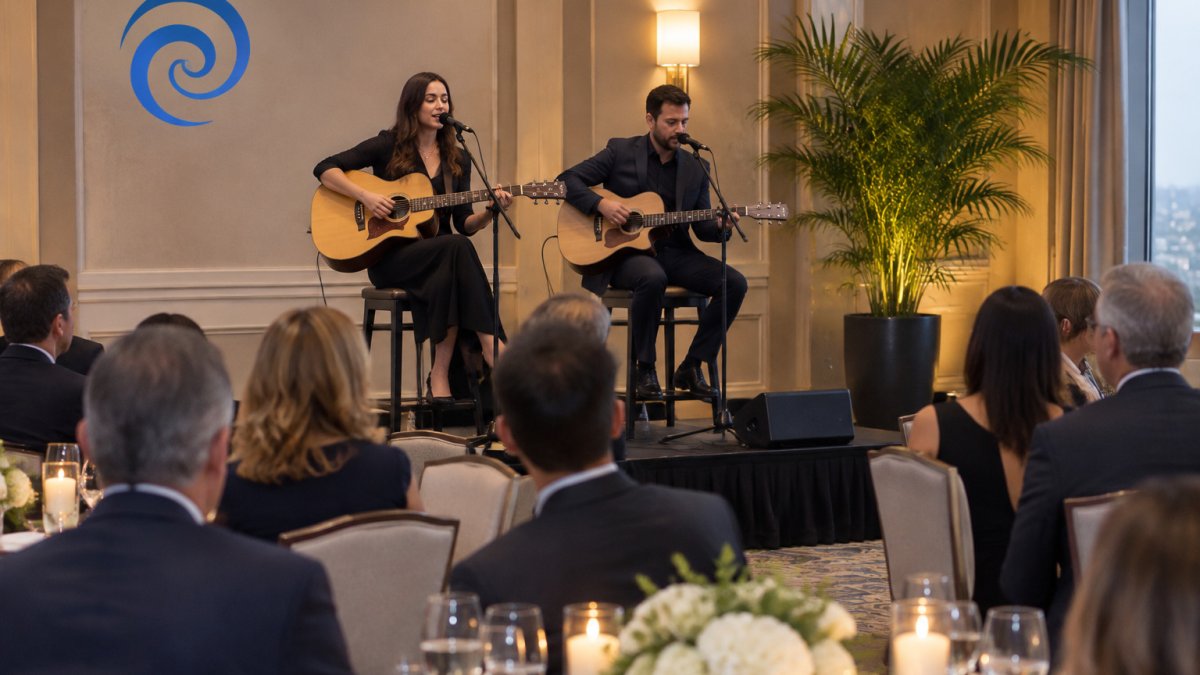
These smaller acts suit events where conversation matters. A jazz trio can set an elegant mood without drowning out voices. A solo acoustic performer is often the easiest option for tight budgets and smaller rooms.
Background Music for Networking and Cocktail Hours
Background music is often the most useful part of a corporate program. Guests arrive, mingle, and settle in. Soft live music keeps the room warm without pulling attention from the people talking.
Many planners place a solo performer or small ensemble here, then shift to a louder act later in the evening.
How to Book a Band for a Corporate Event
Booking a band takes more planning than most people expect. Start early, especially for popular dates like December and spring gala season.
Follow these steps:
- Define your budget and the performance length you need.
- Share the event date, venue, guest count, and start time.
- Ask each act for a clear quote and a list of what it includes.
- Confirm sound, power, and stage requirements with the venue.
- Review the contract for backup plans and cancellation terms.
- Send the final set timing and any must-play or do-not-play songs.
Pricing depends on the date, length of the performance, travel, and equipment needs. Contact Dusty Satterlee for a quote, and ask about current pricing on the book a drain inspection page of the site.
For a deeper walkthrough of hiring entertainment for high-energy events, see our booking guide for corporate entertainment. If you are planning a company-wide event, the corporate services page explains what Dusty Satterlee offers for businesses of different sizes.
Building a Corporate Event Music Playlist
A playlist gives you control over the mood at every stage. Build it in blocks: arrival, dinner, speeches, and the closing set. Keep songs familiar to most of your guests, and avoid anything with explicit lyrics unless your audience has agreed to it.
- Arrival: light, warm, and conversational
- Dinner: soft and steady, no sudden changes
- Program breaks: short, upbeat tracks
- Closing: high energy with a clear finish
Share your playlist with the performer so they can blend it with their own set.
Planning Your Live Music Booking Next Steps
Start with three decisions: the event purpose, the act type, and the budget. Once those are set, reach out to a provider early and share your date and venue details.
If you are ready to move forward, request a show or check availability directly with Dusty Satterlee. Planning ahead gives you the most options and the best chance to get the performer you want.
Frequently Asked Questions
What kind of music do you play at a corporate event?
Most corporate events work best with music that stays upbeat but unobtrusive during arrival and networking, then shifts to more energetic songs for dinner dancing or a closing set. Recognizable pop, soft rock, jazz standards and motown tend to suit mixed-age crowds. Match the genre to your audience and the event’s tone, and ask the performer for a sample set list before booking so you can request changes.
How long should a live band play at a corporate event?
A live band typically plays two to three sets of 45 to 60 minutes each for a standard evening function, with breaks in between so guests can talk. For a cocktail hour alone, a single 60 to 90 minute set is often enough. Confirm the total performance window, set lengths and break times in writing when you book, since these affect both the performance fee and the overall guest experience.
How much does live music cost for a corporate event?
Pricing depends on the act type, the number of performers, the length of the performance, travel distance, and the equipment and production the event needs. Solo performers and duos generally cost less than full bands. Pricing depends on the date, length of the performance, travel, and equipment needs, so visit the website for current prices or request a quote tailored to your event.
What should you ask a live band before booking?
Ask for recent video of a full performance, references from comparable corporate events, and a sample set list. Confirm what sound equipment and stage space they need, whether they provide a sound engineer, how far in advance they require a deposit, and their cancellation and backup policy if a performer becomes ill. Clear answers to these questions prevent most day-of problems.
