
Last Updated: October 29, 2026
Quick Summary
Booking high energy corporate entertainment starts with a clear brief covering your event goals, audience size, budget range and desired tone, then requesting full-length performance videos to confirm the performer’s style fits your crowd before signing a contract. Interactive formats like comedy stage hypnosis and mentalism work best because they turn spectators into participants.
- Interactive formats invite volunteers on stage and adapt to the room, while passive acts keep audiences watching.
- Place your headliner where energy peaks, usually after dinner or mid-program when attention drifts.
- Send the technical rider to the venue’s AV contact at least two weeks before the event for written confirmation.
- Build budgets in three layers: performance fee, production and AV add-ons, and contingency.
- Send a post-event survey within 48 hours, since response rates drop sharply after two days.
Table of Contents
- Why High Energy Corporate Entertainment Decides Your Event’s Success
- Corporate Event Entertainment Ideas That Fill Seats and Keep Them
- How to Book Corporate Entertainment Without the Guesswork
- Building a Corporate Event Run of Show Around Your Headliner
- Technical Rider and AV Requirements Most Planners Overlook
- Budgeting for Corporate Entertainment and Measuring Post-Event ROI
- Book a Show That Gets Your Audience Talking
- Frequently Asked Questions
Why High Energy Corporate Entertainment Decides Your Event’s Success
Booking high energy corporate entertainment is the difference between an event people talk about on Monday and one they forget by the parking lot. The room always tells you the truth.
What Separates Memorable Entertainment From a Forgettable Show
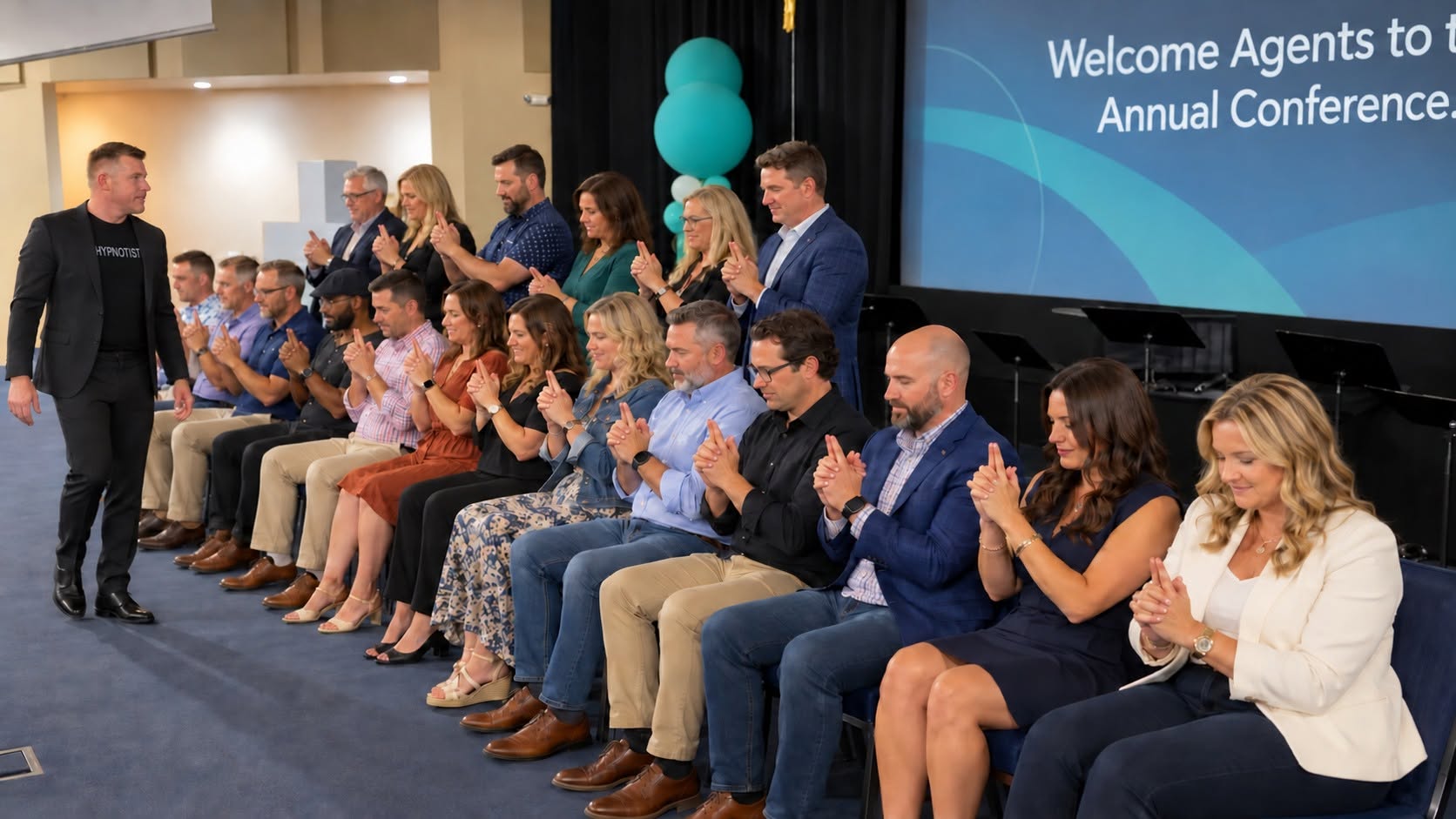
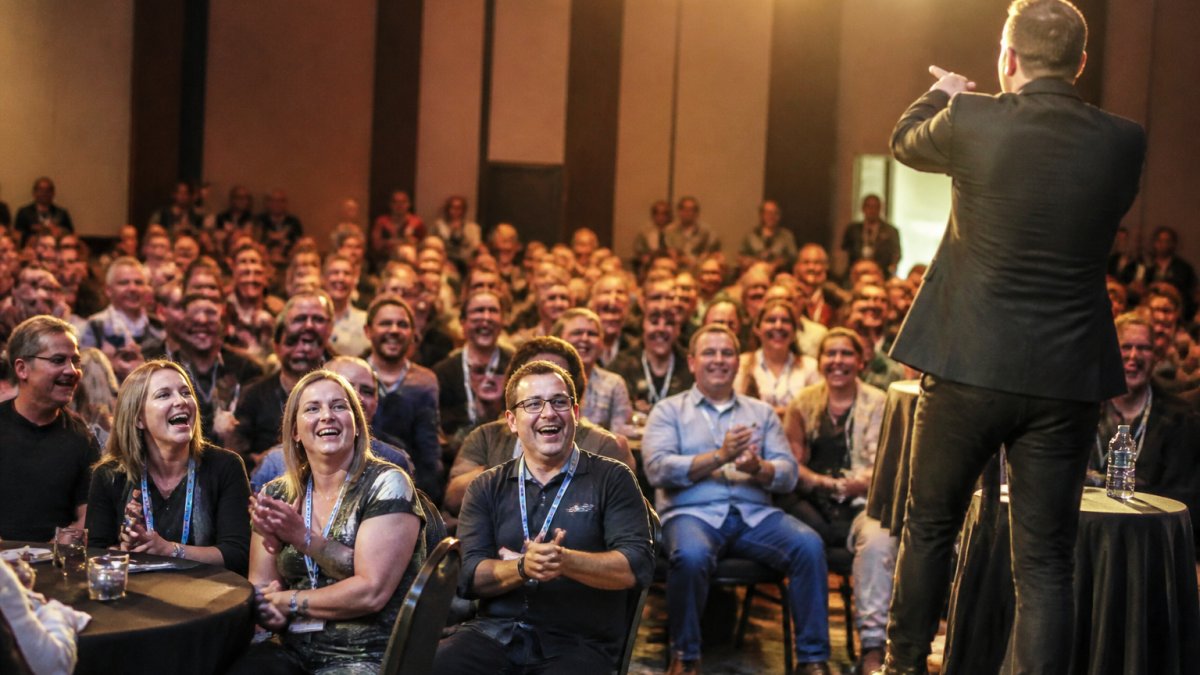
The gap comes down to audience participation. Passive acts ask people to watch. High-energy performers ask them to participate, and that shift changes the entire mood of a room. A comedy stage hypnosis or mentalism show pulls volunteers up, gives the crowd a shared story, and turns spectators into participants. That shared experience is what attendees remember, and it’s why event planners keep coming back to interactive formats.
Corporate Event Entertainment Ideas That Fill Seats and Keep Them
High-energy formats give the audience a role. Comedy stage hypnosis and mentalism put people at the center of the action. If you want a broader menu of formats to compare before you commit, our list of corporate event entertainment ideas covers the options side by side.
Interactive Formats vs. Passive Performances
Interactive entertainment invites volunteers on stage and adapts to the room. Passive performances, like a band or a keynote, keep the audience seated and watching. Both have a place, depending on your goals.
How to Book Corporate Entertainment Without the Guesswork
Booking corporate entertainment starts with a clear brief: your event goals, audience size, budget range, and the tone you want. From there, request performance videos and confirm the performer’s style matches your crowd before you sign a performance contract. A practical method for judging footage makes this far easier.
Questions to Ask Before You Sign a Performance Contract
Ask these before committing:
- Can you share full-length performance footage, not just a highlight reel?
- How do you tailor material to our audience demographics and event theme?
- What is your technical rider, and what AV do you need from us?
- What is your cancellation and backup plan if illness strikes?
Building a Corporate Event Run of Show Around Your Headliner
Your corporate event run of show should place the headliner where energy peaks, usually after dinner or mid-program when attention starts to drift. Build a buffer before and after the performance for setup, audience transition, and applause. Keep the entertainment block clearly timed so event logistics stay on schedule. A tight event timeline protects the performer’s stage time and keeps the attendee experience smooth from arrival to close.
Technical Rider and AV Requirements Most Planners Overlook
A technical rider is the document listing everything a performer needs to deliver the show: sound, lighting, stage space, and backstage access. Most planners overlook how much a strong rider protects the event, and how many day-of failures trace back to a rider that was skimmed instead of reconciled with the venue. You can watch performance videos to see the staging, AV needs, and audience energy in action.
What a High-Energy Act’s Rider Typically Covers
Confirm each rider item in writing with both the performer and the venue before the event.
- Stage and performance area. Minimum stage dimensions, clearance to the ceiling, and a clear path from the stage to the audience for volunteer transitions. Interactive formats need room for participants to walk up and back safely.
- Sound. A handheld wireless microphone for the performer, plus at least one spare wireless mic and fresh batteries. A lavalier is usually not sufficient for a show that moves around the stage. Confirm the venue’s sound system can patch into the performer’s playback device (often a laptop or phone via a DI box or 3.5mm/USB input).
- Lighting. A general stage wash that keeps the performer’s face visible, plus the ability to bring house lights up and down on cue. Interactive shows depend on the performer reading audience faces, so a blacked-out room is a real risk.
- Playback and cues. A designated AV operator who can run walk-in music, show playback, and lighting cues. Ask who that person is by name and confirm they will be on site for the full performance block.
Send the rider to the venue’s AV contact at least two weeks before the event and ask for a written confirmation line by line. A verbal “we have all that” is the most common source of day-of surprises.
How to Reconcile the Rider With Your Venue
Run a check between the performer’s rider, the venue’s AV capabilities, and your run of show. The practical sequence:
- Get the rider from the performer in writing.
- Send it to the venue’s event or AV manager and request a written gap list.
- Price any rentals (extra wireless mic, DI box, cable ramps) and add them to the event budget.
- Confirm the AV operator’s name and on-site hours in the final run of show.
- Do a sound and mic check in the actual room during load-in, not in a rehearsal hall.
Budgeting for Corporate Entertainment and Measuring Post-Event ROI
Corporate entertainment budgeting depends on the performer, the date, and the scale of production, so pricing is best confirmed directly with the performer. What you can control is how you frame the spend to leadership and how you measure event success metrics afterward.
How to Frame the Budget Before You Request Quotes
Build the budget in three layers so quotes are comparable across performers:
- Performance fee. The performer’s base fee for the date and show length. Request quotes rather than anchoring on a number.
- Production and AV add-ons. Rentals the rider requires that the venue does not already own, extra wireless mics, a DI box, cable ramps, additional stage lighting. These are often the line item planners forget.
- Contingency. A reserve for date changes, added show time, or a backup performer if illness strikes.
Ask every performer for a quote broken into these layers. A single all-in number makes it impossible to compare offers or to explain the spend to finance.
Measuring Post-Event ROI: A Practical Framework
The real question leadership will ask is whether the entertainment improved employee engagement or event success. You do not need a research team to answer it, you need to capture the right signals before, during, and after the event.
| Stage | What to Track | How to Capture It | Why It Matters |
|---|---|---|---|
| Pre-event | Booking confirmations, AV checklist, baseline engagement survey | Written confirmations; a short pre-event pulse survey | Establishes a baseline so post-event scores mean something |
| During event | Audience participation rate, phone use, volunteer count, laughter/applause cues | AV operator and event staff observation log | Shows real engagement, not just attendance |
| Post-event | Survey scores, social mentions, referrals, hallway conversation | A 3-5 question post-event survey sent within 48 hours; social listening | Proves ROI to leadership and informs the next booking |
A few practical notes on each:
- Baseline first. Send a short pre-event survey (three to five questions on team morale and event expectations) so post-event scores have a comparison point. Without a baseline, a “good” score is just an opinion.
- Observation log during the show. Have one staff member note volunteer count, how many attendees are on their phones during the performance block, and whether the crowd stays after the show. These are leading indicators of engagement.
- Post-event survey within 48 hours. Ask attendees to rate the entertainment, whether they would attend a similar event again, and one open-ended question about what they remember. Response rates drop sharply after two days.
- Social and referral signals. Track mentions of the event and the performer, and ask whether attendees mentioned the show to colleagues. Referrals are the clearest sign the entertainment created a shared story.
Tie the ROI story to the event’s stated goal. If the goal was team morale, report survey movement and volunteer participation. If the goal was client entertainment, report social mentions and referrals. The same show can be measured against different goals, pick the one leadership already cares about.
That post-event ROI measurement is the angle most planners skip, and it’s the one that justifies the spend to leadership.
Book a Show That Gets Your Audience Talking
The real test of corporate entertainment isn’t the applause. It’s the conversation in the hallway afterward. When a performer connects with the crowd, the event becomes a story people retell for weeks, and that’s the outcome worth planning around.
If your next event needs entertainment that actually lands, Dusty Satterlee brings world-class comedy stage hypnosis and mentalism with a tasteful, elegant style built for corporate audiences. Ready to give your audience something to talk about? Book a show through the Dusty Satterlee website to request current availability and a quote.
Frequently Asked Questions
How do you book entertainment for a corporate event?
Start by defining your event goals, audience size, and budget, then shortlist performers whose style matches your theme. Contact the entertainer or agency directly, request video of a full live show rather than a highlight reel, and confirm availability for your date. Ask for a written performance contract covering the technical rider, load-in time, cancellation policy, and payment terms. Book four to six months ahead for peak seasons, and lock in the run of show details at least two weeks before the event.
What should you ask a corporate entertainer before booking?
Ask how many live shows they have performed for audiences like yours, what happens if they fall ill or cannot travel, and whether they carry liability insurance. Request their technical rider so your venue can confirm power, stage, and sound requirements. Ask how they customize material for audience demographics and event themes. For school or corporate audiences, ask specifically how they keep content tasteful and appropriate, and whether they can dial back audience participation if needed.
How long should entertainment last at a corporate event?
A headline performance typically runs 45 to 60 minutes, which keeps energy high without exhausting the crowd. Interactive formats like comedy hypnosis or mentalism often work best in a single focused block rather than split segments. Build 15 to 20 minutes of buffer around the show in your run of show for introductions, load-in, and audience settling. If entertainment anchors a longer program, pair a 45-minute headline set with shorter warm-up activities earlier in the evening.
How can you make corporate event entertainment engaging but professional?
Choose performers who tailor content to your audience and avoid material that targets individuals in ways that could embarrass them. Interactive entertainment works well when participation is voluntary and the performer reads the room. Brief the entertainer on your corporate culture, any topics to avoid, and the seniority mix in the audience. A performer with stage presence and experience across corporate and school settings will adjust tone in real time, keeping energy high without crossing lines.
Does high energy entertainment work for smaller audiences and tighter budgets?
Yes. Interactive formats like comedy hypnosis and mentalism scale from a few hundred students to large corporate crowds, and pricing depends on date, travel, and show length rather than audience size alone. For smaller budgets, consider a single headline block instead of multiple performers, or pair the show with existing event programming. Ask the entertainer directly for a quote based on your specific event rather than assuming a large-crowd price.
How do you measure whether corporate entertainment was worth the investment?
Track attendance against projections, survey attendees within a week about engagement and overall event satisfaction, and note social media mentions or photos shared during and after the show. Compare post-event survey scores to previous events without headline entertainment. For fundraisers, measure donations or ticket sales against prior years. Qualitative signals matter too: whether people stayed off their phones, talked about the show the next day, and whether leadership asks to book again.
