
Last Updated: October 26, 2026
Quick Summary
Stage hypnosis is safe for schools when it is treated as a managed event with clear boundaries, not a proven-harmless one. Volunteers keep the ability to resist suggestions they find objectionable, and most incidents at school shows are social rather than hypnotic. Schools should ask performers about safeguarding, consent, and distress procedures before booking.
- No large body of controlled research exists on stage hypnosis with minors in schools.
- Elementary audiences are generally a poor fit for a full stage hypnosis show.
- High school is the most common booking, where peer pressure is sharpest.
- Ask performers how they handle a volunteer who becomes upset on stage.
- Do not let a distressed volunteer walk back to their seat unaccompanied.
Table of Contents
- What Stage Hypnosis Is and How It Works
- Stage Hypnosis Risks for Students and Teenagers
- School Assembly Entertainment Safety Checklist
- How Audience Members Are Selected and Consent Works
- School Assembly Performer Questions to Ask Before Booking
- Building an Age-Appropriate Hypnosis Show
- What Happens If a Student Becomes Distressed
- Book a School Hypnosis Show That Puts Safety First
- Frequently Asked Questions
What Stage Hypnosis Is and How It Works
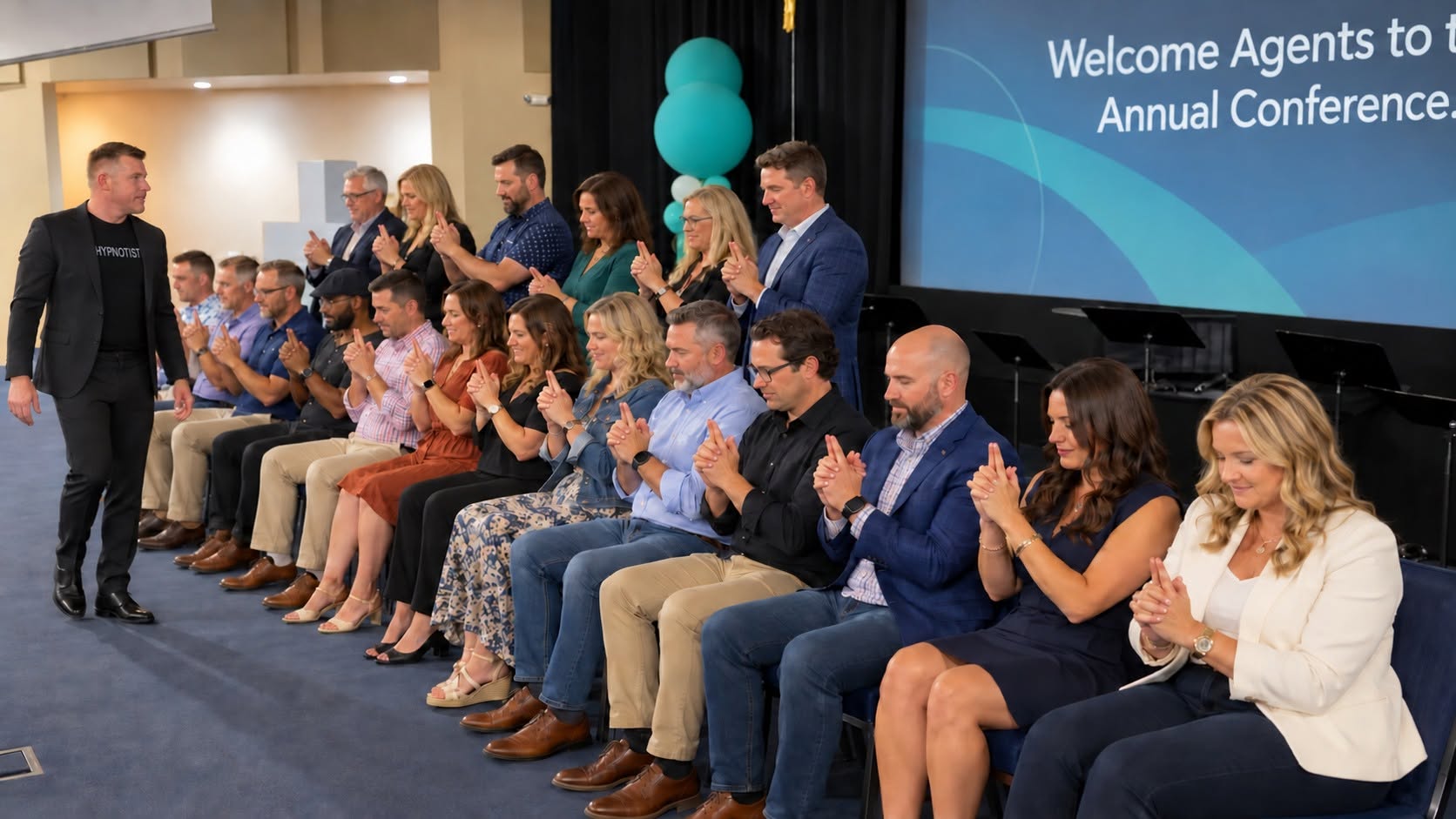
Stage hypnosis is a performance art built on focused attention, vivid imagination, and willing cooperation, not sleep and not mind control. A performer guides volunteers into a relaxed, absorbed state, then offers suggestions that play out as comedy.
That definition settles most of the anxiety around is stage hypnosis safe for schools. Dusty Satterlee performs for high schools, colleges, and corporate functions, drawing on over 15 years of experience.
Here is the mechanism in plain terms:
- Focus narrows. Volunteers stare at a fixed point or listen to a steady voice and tune out the room.
- Imagination takes over. A suggestion like “your eyelids feel heavy” becomes real because the participant pictures it.
- Expectation does the rest. People who volunteer expect to be entertained, and that expectation shapes their response.
The key point: nobody can be made to do something against their values. A hypnotized volunteer who hears a suggestion they dislike simply ignores it, opens their eyes, or walks off stage. That is how the act works.
Stage Hypnosis Risks for Students and Teenagers
Administrators considering stage hypnosis can set clear boundaries and ask questions about safety.
Stage hypnosis is entertainment.
What is reasonably well established:
- Hypnosis is a state of focused attention, not a loss of will. The American Psychological Association’s overview of hypnosis describes hypnosis as focused attention and reduced peripheral awareness, with an enhanced capacity for response to suggestion. People retain the ability to resist suggestions they find objectionable.
- Response varies widely. Not everyone is highly responsive, which is why performers run a group test before inviting volunteers up. A student who does not respond strongly is simply not a good stage candidate.
- Most stage-show incidents are social, not hypnotic. Embarrassment, peer pressure, filming, and crowd behavior account for the overwhelming majority of bad outcomes at school events.
What is genuinely uncertain, and should be stated as such:
- There is no large body of controlled research on stage hypnosis with minors in schools. Claims in either direction, “completely safe” or “dangerous for developing brains”, outrun the evidence. Treat the show as a managed event, not a proven-harmless one.
- Individual vulnerability is not reliably screened at the door. A performer can ask about seizure history and anxiety, but cannot diagnose. That is why the pre-show briefing and the opt-out matter more than any screening form.
- Rare adverse reactions are reported anecdotally. Most practitioners describe occasional dizziness, tearfulness, or a volunteer who feels “off” afterward, resolving with rest and a calm conversation. Serious outcomes are rare, but no honest performer will promise they never happen.
Age and school context change the calculus:
- Elementary audiences. A full stage-hypnosis show is generally a poor fit: shorter attention spans, less reliable consent understanding, and a higher chance of misunderstanding a suggestion. Most experienced performers decline elementary bookings or offer a non-hypnosis variety show.
- Middle school. Workable with tighter limits: fewer volunteers, shorter bits, a staff member within arm’s reach of the stage, and no suggestions touching body image or social status, the two topics most likely to land badly with early adolescents.
- High school. The most common booking, and where peer pressure is sharpest. The risk is rarely the hypnosis; it is the friend who shoves a reluctant classmate forward. Staff positioning and a clearly announced opt-out do more good than content restrictions.
- Prom, graduation night, and after-school events. Consent logistics get harder because parents are not present. If your school requires guardian permission for after-school participation, collect it in advance rather than at the door.
A school show is entertainment.
Age and school context change how a stage hypnosis show should be handled.
| Audience or event | Fit | Key consideration |
|---|---|---|
| Elementary audiences | Generally a poor fit | Shorter attention spans, less reliable consent understanding |
| Middle school | Workable with tighter limits | Fewer volunteers, shorter bits, staff within arm’s reach |
| High school | Most common booking | Peer pressure is sharpest; staff positioning and announced opt-out |
| Prom, graduation night, after-school events | Consent logistics get harder | Parents not present; collect guardian permission in advance |
School Assembly Entertainment Safety Checklist
A school assembly entertainment safety checklist can help organize planning. Use this one before you sign a contract and again on the day.
Before booking:
- Review video of a full performance, not just a highlight reel
Two weeks out:
- Brief teachers and chaperones on their role during the show
On the day:
- Check the stage for trip hazards and clear access on and off
How Audience Members Are Selected and Consent Works
Audience selection is an important consideration. A performer can ask for volunteers.
Voluntary participation is an important consideration. Schools can determine whether they require parent or guardian consent for after-school events like prom or graduation night.
Schools can remind students that participation is optional.
School Assembly Performer Questions to Ask Before Booking
These questions can help guide a conversation with a school assembly performer. Ask directly and listen for specific answers.
On experience and training:
- How many school shows have you performed, and at what grade levels?
- What formal training have you completed in hypnosis?
- Are you a member of a professional hypnosis organization?
On safety and safeguarding:
- What is your process if a volunteer becomes upset on stage?
- Do you carry liability insurance?
- Will you sign and follow our safeguarding policy?
- How do you handle a student who wants to leave the stage?
On content:
- How do you keep the material age-appropriate?
- What topics are off-limits?
- Can you adjust the show for a younger audience?
On logistics:
- What happens if you are ill or cannot travel on the day?
- What is your cancellation policy?
- What are your technical and space requirements?
The answers tell you a lot. A performer who hesitates on the distress question, or brushes off the safeguarding policy, is telling you something important.
This is also where you vet a school hypnotist properly. Dusty Satterlee draws on over 15 years of experience and training from Michael C. Anthony and the Mike Mandell Hypnosis Academy.
Building an Age-Appropriate Hypnosis Show
Dusty Satterlee’s performances combine comedy stage hypnosis and mentalism in a tasteful and elegant style.
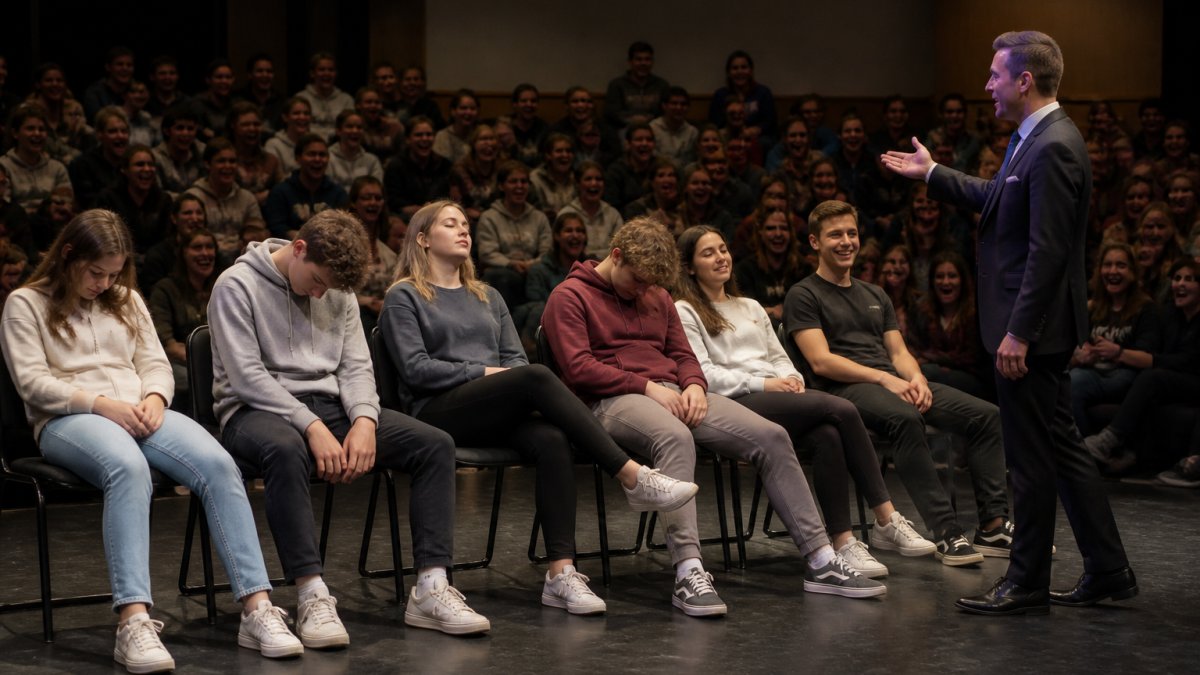
What works for high school and college crowds:
- Imagined scenarios. Volunteers believe they are stuck to the chair, or that the room is freezing, or that they are on a roller coaster.
- Physical comedy. Suggestions that produce visible, funny movement without anyone touching anyone else.
- Group bits. Several volunteers reacting to the same suggestion at once, which spreads the attention and reduces pressure on any one student.
- Music and timing. A good soundtrack and a brisk pace keep the energy up.
The tone matters as much as the content. Dusty Satterlee’s performances are described as tasteful and elegant.
What Happens If a Student Becomes Distressed
Do not let a distressed volunteer walk back to their seat unaccompanied, and do not resume the show with that student in the audience until they are oriented and calm. The instinct to minimize disruption is understandable, but an unaccompanied exit is the single most common procedural miss at school events.
The Centers for Disease Control and Prevention’s guidance on school mental health supports having a calm, supervised space and a trusted adult available at school events. That is good practice for any assembly, hypnosis show or not, which is the point. A well-run hypnosis show does not require a special crisis plan; it requires the same supervision and quiet-room setup a school should already have for any large event, applied deliberately.
One more detail worth discussing with the performer in advance is how they would respond if a volunteer became distressed.
Book a School Hypnosis Show That Puts Safety First
Booking a school hypnosis show is a decision about trust as much as entertainment. The schools that get it right ask hard questions, set clear boundaries, and choose a performer who treats students with care.
Dusty Satterlee’s performances combine world-class mentalism and hypnosis in a tasteful, elegant style. Dusty brings over 15 years of experience, training from veteran international stage hypnotist Michael C. Anthony and the Mike Mandell Hypnosis Academy, and membership in Stage Hypnosis University.
An Edinburg High School Post Prom customer said: “They did an amazing job!! He was prompt and all of our students and volunteers at Edinburg High School’s Post Prom really enjoyed him and his helper!!”
If you are weighing whether stage hypnosis is right for your assembly, prom, or graduation night, start with a conversation. Get started with Dusty Satterlee and book a show.
Frequently Asked Questions
Is stage hypnosis safe for students?
Schools can ask performers about training, insurance, and consent procedures before booking.
What are the risks of stage hypnosis for teenagers?
Schools can ask performers about their experience and discuss event-planning considerations before booking.
Can someone get stuck in hypnosis?
The verified facts describe stage hypnosis as entertainment but do not establish whether someone can get stuck in hypnosis.
What should a school ask a hypnotist before booking?
Ask about the performer’s training and experience. You can also discuss how the show fits your event and ask questions about student participation.
