
Quick Summary
To plan a mentalism show, start by defining the event goal and audience, then choose an in-person, virtual or hybrid format. Build the show in three parts, add participation that respects consent, and check the room, sound and lighting before the event.
- Define one primary goal such as fun, team bonding, fundraising or a message.
- Choose the format first: in-person, virtual, or hybrid.
- Structure the show into an opening hook, a strong middle, and a memorable closing finale.
- Only invite volunteers who opt in, and offer a simple way to decline.
- Test microphones and speakers at the back of the room before guests arrive.
Table of Contents
- Start With the Event Goals and Audience
- Choosing a Show Format: In-Person, Virtual, or Hybrid
- Building a Mentalism Show Structure That Holds Attention
- Audience Participation Ideas for a Mentalism Show
- How Long a Mentalism Show Should Run
- Room Setup, Sightlines, Sound, and Lighting
- Questions to Ask When Booking a Mentalist
- Booking Your Show and Next Steps With Dusty Satterlee
- Frequently Asked Questions
Start With the Event Goals and Audience
Last Updated: November 12, 2026
Most mentalism shows fail for a simple reason: the performer planned the tricks before anyone asked what the event was for. At Dusty Satterlee, we start every booking with the goal, because a post-prom crowd, a sales retreat and a fundraising dinner need very different shows. The format, length and participation level all follow from that goal. Plan the goal first and the rest gets easier.
Ask who is in the room. A high school assembly of 400 students needs fast energy and clear pacing. A corporate audience of 60 managers may want something more polished and conversational. Note the age range, the mix of people, and whether attendees know each other.
- Define one primary goal: fun, team bonding, fundraising, or a message
- Note the audience size and age range
- Confirm the event’s tone, such as formal, casual, or family-friendly
- Identify any sensitive topics the organizer wants avoided
Questions to Answer in the First Client Call
The first call sets the direction. Keep notes on the answers, since they shape the whole plan.
- What is the event, and what should attendees feel afterward?
- How many people will attend, and how are they seated?
- How much time is available for the show?
- Is there a budget range, and what does it cover?
- Will there be audio, lighting, or a stage, or does the room need to be set up?
Choosing a Show Format: In-Person, Virtual, or Hybrid
Pick the format before you pick the material. In-person shows give the strongest energy and the most direct audience participation. Virtual shows work well for remote teams and spread-out groups, but they need careful planning so viewers stay engaged through a screen. Explore virtual entertainment ideas for corporate events that work to see how this format plays out. A hybrid event combines both and suits organizations with staff in several locations.
Each format changes how the show runs. Live rooms allow walk-throughs and close interaction. Virtual shows depend on a stable platform, clear audio, and a host who keeps chat and questions moving.
- In-person: strongest energy and direct volunteer involvement
- Virtual: good for remote teams, needs a reliable video platform
- Hybrid: reaches both rooms, but requires extra technical setup
Building a Mentalism Show Structure That Holds Attention
A strong show has a clear arc. Attention drops fast when a performer piles on tricks without pacing. Build the program in three parts so the audience always knows where the show is heading.
Opening, Middle, and Closing Segments
The opening should grab attention within the first two minutes. Start with a simple demonstration that proves the performer is in control. Save the most dramatic effects for the middle, where energy can build. Close with a memorable finale that people will talk about on the way out.
- Opening: a quick, clear hook that invites people in
- Middle: the strongest interactive segments, spaced with lighter moments
- Closing: a finale that ties back to the event goal
Audience Participation Ideas for a Mentalism Show
Participation is what turns a mentalism show from a demonstration into a shared experience. Volunteers become part of the story, and the room reacts to the surprise together. But interactive mentalism depends on people who feel safe enough to raise a hand, so the design of participation matters as much as the effects themselves.
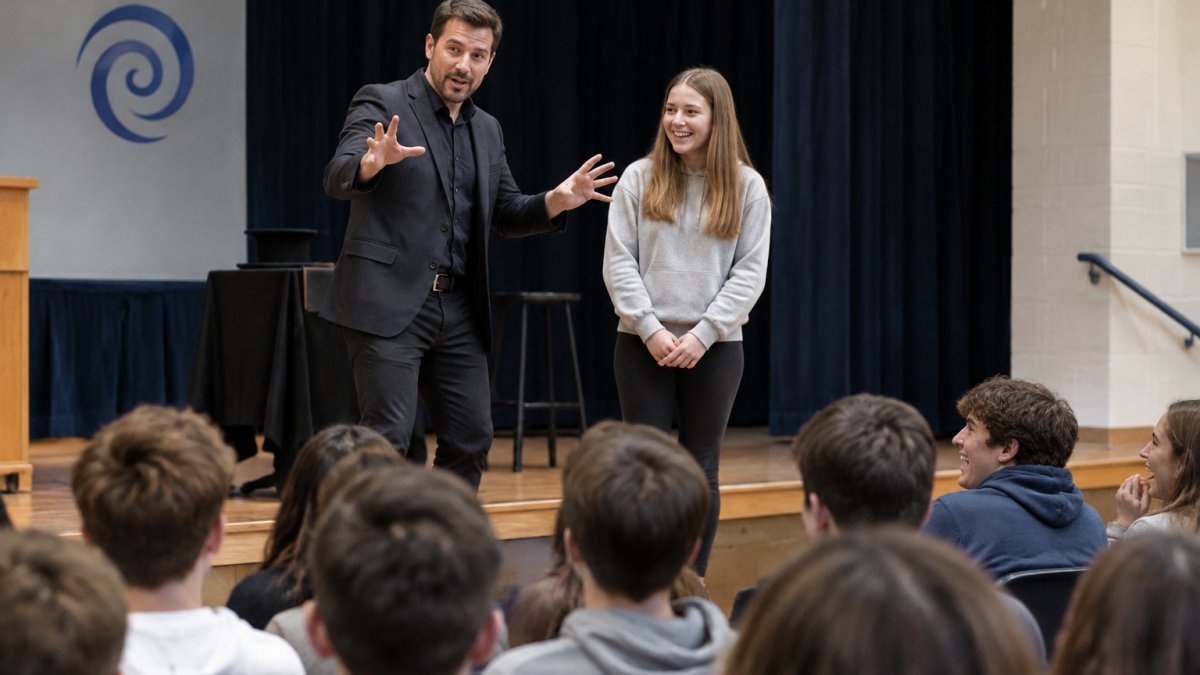
Start by choosing participation formats that fit the crowd and the event goal. Common options include:
- Prediction games with an audience vote. The whole room commits to an outcome before the reveal, which keeps non-volunteers involved without putting anyone on the spot.
- Short volunteer demonstrations on stage. One or two people join the performer for a single effect, then return to their seats. Keep each segment under five minutes so momentum stays high.
- Group challenges the whole room can follow. Counting, drawing, or writing exercises that every table can do at once work well for large assemblies and dinner crowds.
- Plant-free audience readings. The performer works with a volunteer’s own written response rather than a pre-set reveal, which reads as more genuine to a skeptical corporate audience.
Match the mix to the room. A high school assembly of 400 students needs fast, high-energy participation with clear crowd cues. A corporate audience of 60 managers usually responds better to a smaller number of polished, conversational interactions. A fundraising dinner benefits from participation that lets donors feel involved without turning the evening into a comedy show.
Keeping Volunteers Comfortable and Consenting
Never pull anyone on stage without a clear invitation. Let people opt in, and offer a simple way to decline without embarrassment, a hand signal, a shake of the head, or a host who quietly moves on.
A common pattern is to brief the event host in advance on how volunteers will be selected, so the host can steer the performer toward willing participants and away from anyone who would be uncomfortable. Watch out: if the performer relies on surprise volunteer selection, the first person chosen may freeze, and the room’s energy drops for the rest of the segment.
Making Participation Accessible and Inclusive
Interactive mentalism has to work for the whole room, not just the people who can easily reach a stage. Build in these accommodations from the start:
- Offer a seated participation option so guests with mobility aids can take part without navigating stairs.
- Provide a microphone for any volunteer who speaks, so the back of the room can hear the interaction.
- Avoid effects that depend on color vision, hearing, or fine motor control as the only path to participation.
- Ask the organizer in advance about sensory sensitivities, language needs, and any guests who should not be called on.
- Keep instructions short and repeat them once, so guests who process language differently can follow along.
When participation is designed with consent and accessibility in mind, the audience relaxes, volunteers say yes more readily, and the show’s biggest moments land with the whole room rather than a lucky few.
The article lists four participation formats; this table summarises what each one is best for and its key trade-off.
| Format | Best for | Key difference |
|---|---|---|
| Prediction games with audience vote | Keeping non-volunteers involved | Whole room commits before reveal |
| Short volunteer demonstrations | Single effect, high momentum | Keep each segment under five minutes |
| Group challenges | Large assemblies and dinner crowds | Every table does it at once |
| Plant-free audience readings | Skeptical corporate audiences | Uses volunteer’s own written response |
How Long a Mentalism Show Should Run
Match the length to the event and leave time for questions if they fit the format.
Room Setup, Sightlines, Sound, and Lighting
A good room makes the show easier to see and hear, and it protects the moments the audience came for. Interactive mentalism depends on the room reading as one shared experience, so production details that seem minor, where the stage sits, how the microphone sounds, whether the performer’s face is lit, can decide whether a reveal lands or falls flat.
Stage Placement and Sightlines
Place the performance area where every seat has a clear, unobstructed view of the performer’s face and hands. Avoid stages that force the front rows to crane upward or the back rows to look around columns, pillars, or a low ceiling. Reserve a clear path from the audience to the stage so volunteers can walk up without climbing over tables.
- Put the stage on the long wall of a rectangular room so sightlines fan out evenly.
- Keep the performance area free of clutter, cables, and unused chairs.
- Seat the organizer and any VIP guests where they can see and be seen by the rest of the room.
- Reserve a quiet spot near the stage for volunteers to wait before and after their segment.
Sound and Microphone Setup
Test microphones and speakers before doors open, and test them again after guests arrive, since a full room absorbs sound differently than an empty one. Check that the room’s audio does not produce feedback near the stage, and confirm that any music cues are audible without drowning out the performer.
- Run a sound check at the back of the room, not at the front.
- Confirm battery levels and have spare batteries on hand.
- Keep volume low enough that guests can talk at their tables before the show starts.
- Coordinate music cues with the venue’s AV contact, not just the event planner.
Lighting the Performer and the Room
Use lighting that keeps the performer’s face visible and reduces glare from windows or overhead fixtures. If the room has large windows, check the light at the same time of day as the show, since late-afternoon sun can wash out the stage.
- Aim front light at the performer’s face, not the back wall.
- Dim house lights slightly during effects, but keep enough light for volunteers to move safely.
- Avoid spotlights that blind the performer or spill into the audience’s eyes.
- Confirm the venue can control lighting during the show, not just before it.
Watch out: if the room is set for a banquet with a dance floor in front of the stage, the performer may be pushed far from the audience, and the interaction will feel remote, ask for the stage to be placed as close to the seated guests as the room allows.
Questions to Ask When Booking a Mentalist
Before you sign anything, ask a few direct questions. Does the show fit the audience’s age range? How much interaction happens, and can it be scaled down? What happens if the performer is sick or unable to attend? Get clear answers on each point so there are no surprises on event day. Use this checklist of pre-booking questions to work through them.
Pricing depends on quantity, dates, and delivery. For current rates or a custom quote, contact Dusty Satterlee directly.
Booking Your Show and Next Steps With Dusty Satterlee
Planning a mentalism show is much easier with a clear goal, a defined format and a solid structure. Before you commit, review what a hypnotist booking contract should include before you sign. Dusty Satterlee brings more than 15 years of experience and training from Michael C. Anthony and the Mike Mandell Hypnosis Academy.
BUTTON: Book A Show
CARD_TITLE: Ready to plan a show that people remember?
CARD_TEXT: Dusty Satterlee brings tasteful, interactive mentalism to schools, companies and private events.
Frequently Asked Questions
How do you plan an interactive mentalism show?
Start with the event goals, audience size, and room. Then decide on format, show length, and how much audience participation fits the crowd. Confirm the room layout, sound, and lighting before the event. Dusty Satterlee can walk you through these decisions for your specific event. Visit the website to book a show or request a quote.
How long should a mentalism show be for a corporate event?
Ask the performer how they adjust length for your audience size and whether the program can be shortened or extended on the day. Pricing depends on the date, location, and length, so request a quote from Dusty Satterlee’s website for current details.
How can a mentalist involve an audience without making guests uncomfortable?
Invite participation that is voluntary and low pressure. Let guests opt in, avoid putting anyone on the spot without warning, and keep physical or personal requests out of the show. Explain the format at the start so people know what to expect. A good performer watches the room and adjusts when someone seems hesitant. Tasteful performances with clear boundaries help everyone in the audience feel comfortable, from students at a school assembly to coworkers at a corporate function.
What should you ask before booking a mentalist?
Ask how long the show runs, how many guests it can accommodate, and whether the performer has experience with your audience type, such as students, corporate teams, or fundraising donors. Confirm the technical requirements, including sound, lighting, and stage space. Request a clear quote that lists what is included. Dusty Satterlee’s website is the best place to start for current availability and pricing.
