
Last Updated: October 30, 2026
Quick Summary
School hypnosis entertainment is appropriate when the performer is vetted, volunteers opt in freely, and staff supervise the stage. It is comedy and mentalism, not treatment, and it should use family-friendly content that never singles out or humiliates students. A school should confirm district policy and get written approval before booking.
- Volunteers should raise a hand and must be able to decline or stop at any time.
- A staff member should stand near the stage, at the side where volunteers enter and exit.
- Ask for a recent school or youth event reference before booking any performer.
- Content for high school audiences should be family-friendly and never humiliating.
- Get the district policy and principal’s approval in writing before the show.
Table of Contents
- What Stage Hypnosis Is and How It Actually Works
- Is Stage Hypnosis Real or Staged?
- Stage Hypnosis Safety and Consent for Student Volunteers
- Age-Appropriate Hypnosis Show Content for Students
- Questions to Ask a School Hypnotist Before Booking
- School Event Approval Checklist and Policy Considerations
- Planning a Hypnosis Show for School Assembly Day
- Booking Your Next Student Assembly With Dusty Satterlee
- Frequently Asked Questions
What Stage Hypnosis Is and How It Actually Works
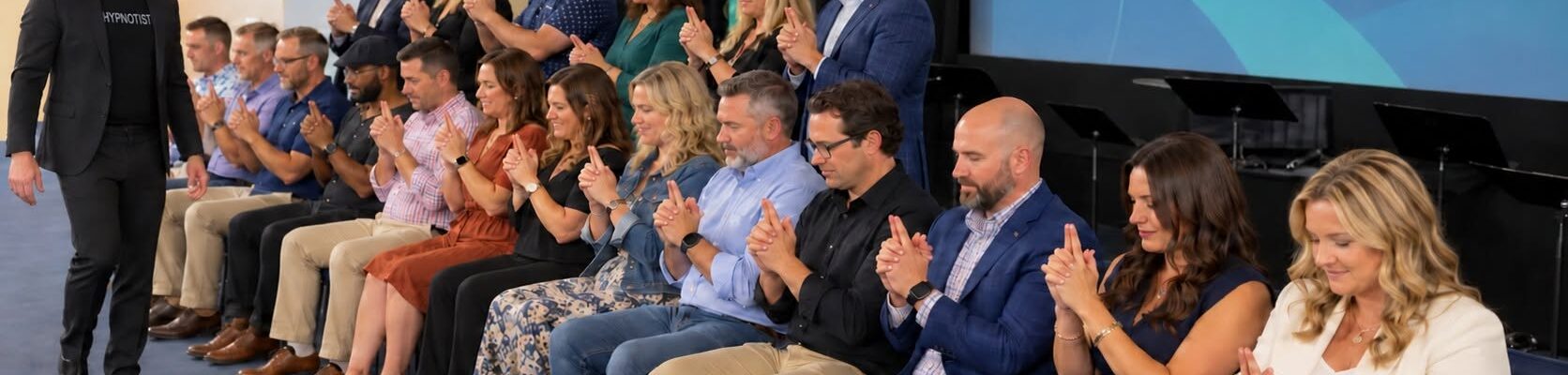
School hypnosis entertainment is a form of live entertainment in which a performer invites audience members to take part in playful, structured suggestions. The show is built around the performer’s presentation, timing, and showmanship. Audience members who choose to participate are the stars of the act.
Most of the effect comes from the way the performer guides attention and expectation. Volunteers who want to play along tend to respond to suggestions, which is why selection matters so much. A good performer screens for willing participants and keeps the experience light.
- Stage hypnosis is entertainment, not treatment
- Volunteers are chosen from people who raise their hands
- The performer controls pacing, tone, and content
Is Stage Hypnosis Real or Staged?
Stage hypnosis is a performance, and both sides of the stage know it. Volunteers are not forced to do anything, and many of the “effects” in school hypnosis entertainment rely on suggestion, expectation, and showmanship. That does not make the show fake in a dishonest way. It means the audience is watching a skilled performance of human response.
Be wary of any act that promises medical results or claims to change behavior permanently. Learn more in our article on whether school stage hypnosis is safe and legitimate. A legitimate entertainment hypnotist describes the show as comedy and mentalism, not as a cure.
Watch out: Promotional videos can look more dramatic than a live show in a gym full of students. Ask for a live reference or a recording from a comparable school event.
Stage Hypnosis Safety and Consent for Student Volunteers
Consent is the foundation of any school show, but consent on paper is not enough. Students should never be pressured to volunteer, and no student should feel they must take part to avoid standing out. Make it clear that sitting in the audience is a full and respected choice, and repeat that message from the stage before anyone is invited up.
A two-step volunteer process is a sensible approach for any school show. First, the performer explains the format and invites interested students to raise a hand. Second, a staff member or the performer briefly speaks with each interested student away from the crowd to confirm they want to participate and understand they can stop at any time. This step helps filter out students who raised a hand because of peer pressure and gives shy volunteers a quiet exit.
Before the show, administrators should confirm that the performer:
- Explains the format and content to staff in advance
- Offers a clear, opt-in invitation to volunteers
- Screens volunteers for willingness, not just enthusiasm
- Stops any suggestion that causes discomfort
- Keeps a teacher or chaperone near the stage area
- Agrees on a visible stop signal a volunteer can use at any time
Supervision matters during the show. A staff member should stand within a few feet of the stage, ideally at the side where volunteers enter and exit, so a student who wants to stop can step away without crossing the audience. The performer should never block a volunteer’s path off the stage or pressure a student to continue after a request to stop.
Safety is also about what happens after a show. A performer should never give students instructions for home, and no student should be asked to keep secrets from parents or staff. A short debrief with staff after the assembly helps identify any student who seemed distressed, embarrassed, or unusually affected. If a student reports lingering discomfort, the school’s counseling staff, not the performer, should follow up.
Any suggestion that targets a student’s body, relationships, family, or personal struggles is a red flag. So is any performer who resists a parent or administrator observing the show.
Finally, ask how the performer handles a volunteer who becomes upset or wants to stop mid-suggestion. A clear answer includes stopping the bit immediately, thanking the volunteer, and inviting them to return to their seat without comment. Vague answers are a sign the performer has not thought through the school setting.
Age-Appropriate Hypnosis Show Content for Students
Content should match the audience. A high school assembly calls for clean humor, no suggestive material, and no content that targets students’ bodies, relationships, or personal struggles. The performance should entertain the whole room, not single out a few students for embarrassment.
Look for these signs of appropriate content:
- Family-friendly language and themes
- Suggestions that are silly, not humiliating
- No mocking of students who decline to volunteer
- A tone that works for the youngest and oldest students in the room
Ask any performer how they adjust material for a school crowd. A clear answer is a good sign.
Questions to Ask a School Hypnotist Before Booking
Use these questions to vet any performer before you sign:
- How do you select volunteers, and can students decline at any point?
- Can you share a recent school or youth event reference?
- What material do you use for a high school audience?
- How do you handle a volunteer who becomes upset?
- Will a staff member be present on stage with volunteers?
- What is your cancellation and backup plan if you cannot attend?
Also ask whether any performer carries liability insurance and can provide a certificate. Many districts require this before any outside presenter works with students.
Use these questions to vet any performer before you sign:
| Question | What to listen for | Why it matters |
|---|---|---|
| How do you select volunteers? | Students can decline at any point | Protects student consent |
| Can you share a recent school or youth event reference? | A recent, comparable school event | Confirms track record with students |
| What material do you use for a high school audience? | Family-friendly, non-humiliating content | Keeps the show appropriate for teens |
| How do you handle a volunteer who becomes upset? | Stops the bit, thanks and returns the volunteer | Shows the performer plans for distress |
| Will a staff member be present on stage with volunteers? | Staff on stage with volunteers | Adds supervision during the show |
| What is your cancellation and backup plan? | A clear plan if the performer cannot attend | Avoids disruption to the assembly |
School Event Approval Checklist and Policy Considerations
Most schools have an approval process for outside presenters, and hypnosis shows deserve more scrutiny than a typical assembly because they involve student volunteers on stage. Before booking, check with your district office and the principal. A simple checklist helps:
- Confirm district policy on outside entertainers and any rules specific to hypnosis or suggestion-based acts
- Get written approval from the principal
- Review the show outline and content
- Confirm volunteer consent and opt-out procedures
- Verify insurance and background check requirements
- Assign a staff member to monitor the stage area
- Agree on an incident response plan
Policies vary by district and state. Check your own school system’s rules rather than relying on general guidance. Some districts treat hypnosis as a form of entertainment requiring standard presenter approval; others may require additional review because of the volunteer participation. Ask specifically whether the district has a policy on hypnosis, suggestion, or audience-participation acts, and get the answer in writing.
Age and consent deserve their own line in the approval file. For high school audiences, a common approach is to require parental notification before the assembly and an opt-out for any student who does not want to attend or participate. For middle school audiences, some schools require written parental consent for any student who volunteers.
Accessibility and inclusion belong in the plan too. Students who use wheelchairs, are deaf or hard of hearing, or have anxiety or sensory sensitivities should be able to enjoy the assembly without being put on the spot. Ask any performer how they accommodate volunteers with disabilities and how they handle a student who wants to leave the room. Seating should allow a quiet exit, and staff should know where that exit is.
Incident response should be written down, not assumed. A workable plan names who is responsible for a distressed volunteer, where that student will be taken, and how parents will be contacted. It also names who has authority to stop the show. In practice, the principal or a designated administrator should hold that authority, and the performer should agree in advance to stop on request.
Appropriateness is a decision, not a default. A hypnosis assembly fits when the performer is vetted, consent is documented, supervision is assigned, and the school has a written plan for stopping the show and supporting a student who becomes upset.
Finally, compare the show with alternatives. A hypnotist competes with a comedian, a motivational speaker, a game show, and a talent showcase for the same assembly slot. Ask what the show adds to your school’s goals, whether the content fits your community, and whether the cost and planning burden are justified. If the answers are unclear, the safer choice is a different assembly.
Planning a Hypnosis Show for School Assembly Day
A well-planned assembly runs smoothly. Plan the schedule with time for setup, the show itself, and a short debrief with staff. Seat volunteers’ friends nearby so students feel supported. Brief teachers on how to handle any student who wants to leave the room.
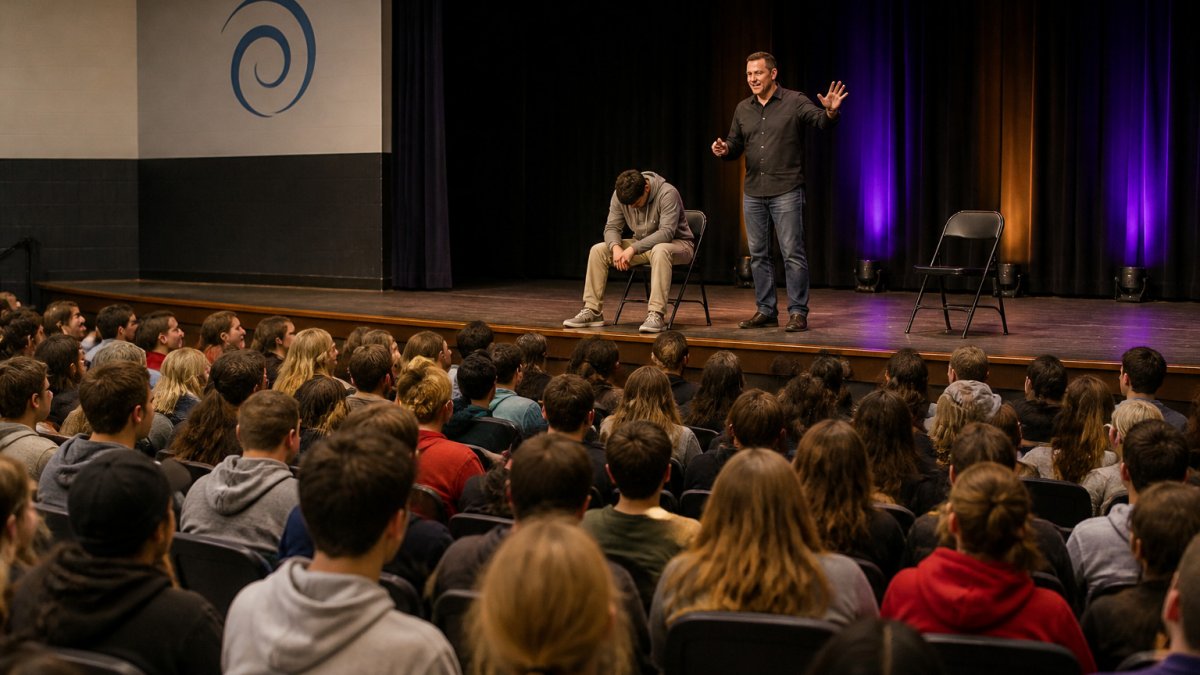
Pay attention to room layout. A raised stage with clear sightlines keeps the audience engaged and gives the performer room to work. Test sound and lighting beforehand.
After the show, collect feedback from staff and students. Note what worked and what should change for next year.
Booking Your Next Student Assembly With Dusty Satterlee
Dusty Satterlee performs comedy stage hypnosis and mentalism for high schools, colleges, and corporate events. Dusty trained under veteran stage hypnotist Michael C. Anthony and at the Mike Mandell Hypnosis Academy, and is a member of Stage Hypnosis University. A post-prom organizer has described the show as an enjoyable experience for students and volunteers.
Pricing depends on the event date, audience size, and delivery needs. For current pricing or to discuss your assembly, visit the High Schools page or contact Dusty directly. Dusty can walk your team through the content and volunteer process for your school.
Frequently Asked Questions
Is school hypnosis entertainment appropriate for a school assembly?
It can be, when the performer is professional, the content is non-offensive, participation is voluntary and the show is approved under your school’s policies. Appropriateness depends on the specific performer, the audience’s ages, the consent process and how the show is framed. Ask for a sample of the full show, confirm that students can opt out without penalty, and share the plan with administrators before booking. Shows built around humor, mentalism and voluntary participation are generally easier to approve than shows that single out individual students.
How can students participate in a hypnosis show safely?
Participation should be voluntary, with students choosing to come on stage and able to leave at any time. Good shows use open, positive suggestions and avoid anything that asks volunteers to reveal personal information, take physical risks or behave in embarrassing ways. Staff should be present to support students, and the performer should have a clear process for ending a suggestion or step at any point.
What content should a school hypnosis show avoid?
Avoid content that is sexual, violent, demeaning toward race, gender, religion or disability, or that mocks students’ bodies, academic performance or home lives. Shows should also avoid suggestions involving alcohol, drugs or risky behavior. Ask the performer to outline the material in advance and confirm that edits can be made if your school asks for them.
What should schools ask a hypnotist before booking a show?
Ask about experience working with school audiences, how volunteers are selected and protected, what content is used, how the show handles students who do not want to participate, and what the backup plan is if the performer cannot attend. Request references from schools that have hosted the show and confirm insurance and any written safeguarding or consent process before signing an agreement.
