
Table of Contents

Last Updated: October 19, 2026

Why Vetting Stage Hypnotists Matters Before You Book

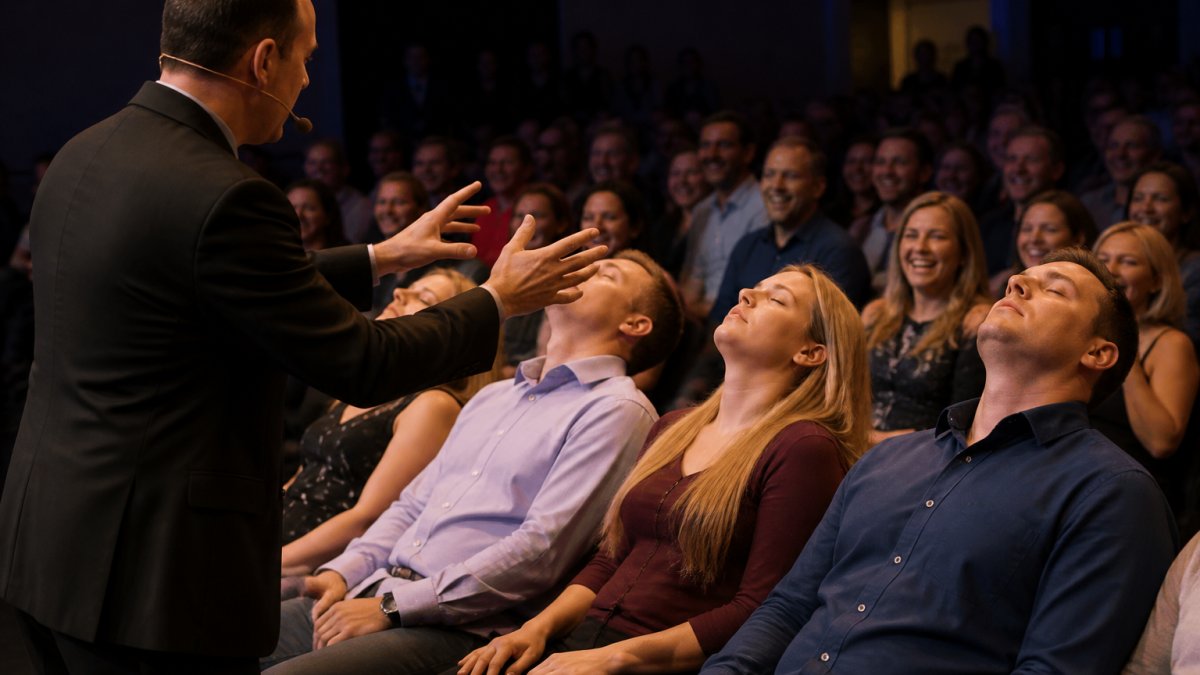
Learning how to vet stage hypnotists is the difference between an event people talk about for months and one they forget by Monday.

This guide from Dusty Satterlee covers the checks that matter: credentials, references, safety, contracts, and showreel evidence.

Most booking mistakes happen early: organizers fall for a slick promo video, skip the questions, and discover the gaps on show night.

Key Takeaway
Vetting a stage hypnotist is not about doubting the performer. It is about confirming that their training, safety habits, and live track record match the claims on their website.

Start With Credentials: Training, Experience, and Professional Ties

Ask any stage hypnotist to name their training and professional organizations. A serious professional answers without hesitation; vague answers are your first red flag.

Here is what to confirm:

  • Formal training: Where did they study hypnosis, and with whom?
  • Years performing: How long have they worked live audiences specifically?
  • Professional membership: Are they part of a recognized hypnosis association or guild?

Membership in a professional body is not a guarantee of quality, but it signals accountability. At Dusty Satterlee, our background includes membership in Stage Hypnosis University, training at the Mike Mandell Hypnosis Academy, and mentorship under veteran international stage hypnotist Michael C.

A common mistake is accepting “certified” without asking certified by whom. Ask for the specific school or body, then look it up.

Stage Hypnotist References and Reviews: How to Verify Real Track Record

Reviews on a performer’s own site are marketing. References you call yourself are evidence. Ask for three recent clients who booked a similar event size and audience type.

Then actually call them, many organizers collect references and never dial.

Reference Questions That Reveal the Real Show

Use these questions to get past polite answers:

  1. Did the performer arrive on time and prepared?
  2. How did they handle a nervous or reluctant volunteer?
  3. Did the material land well with your specific audience?
  4. Were there any complaints afterward from attendees or staff?
  5. Would you book them again, and why?
  6. How did they communicate in the weeks before the event?

Listen for specifics. “They were great” tells you little. “They called two weeks out, asked about our audience, and adjusted the show” tells you plenty.

Pro Tip
Ask each reference one open question at the end: “What should I know that I haven’t asked?” This is where the honest details surface, both good and bad.

Stage hypnotist safety practices are the clearest sign of a professional. Good performers treat consent and participant wellbeing as non-negotiable, but “we take safety seriously” is not a vetting answer.
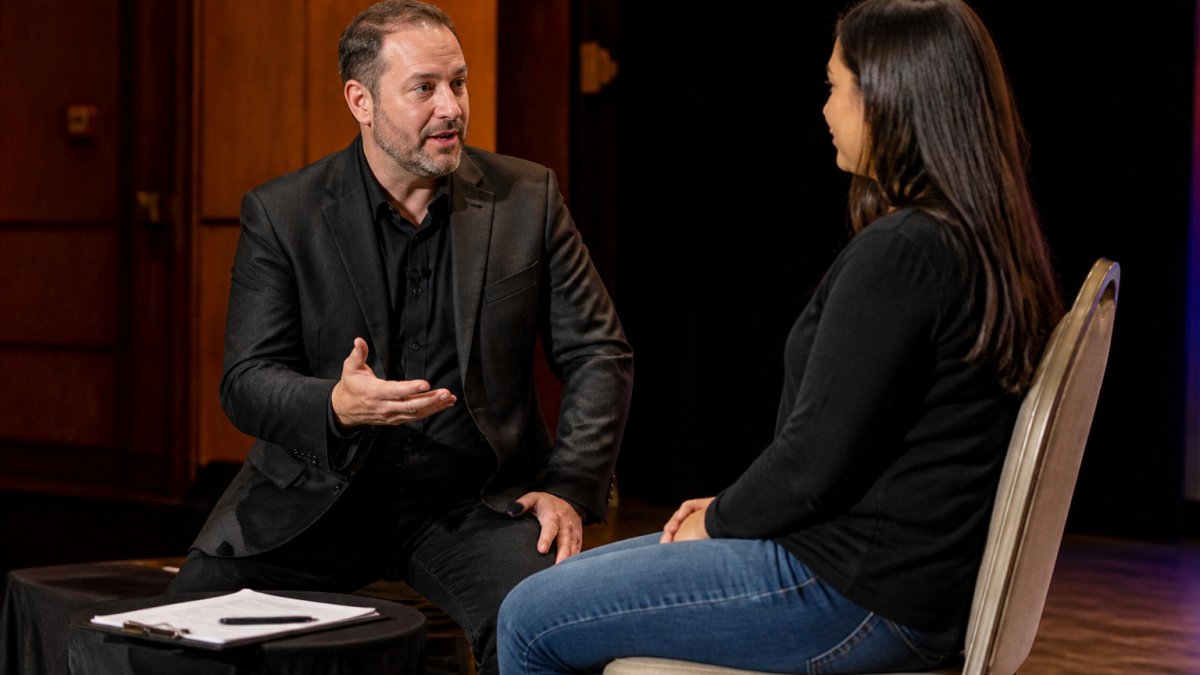
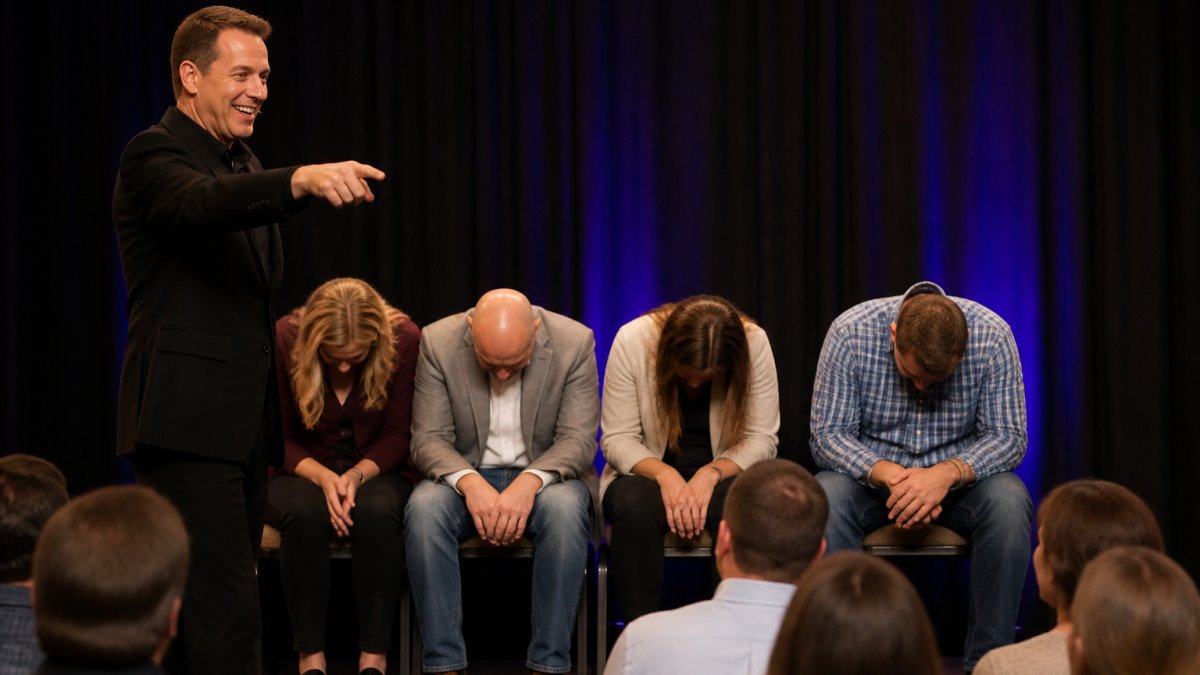
A stage hypnotist speaking calmly with a seated volunteer on a stage, a clipboard and consent forms visible on a side table, warm stage lighting

Ask the performer to walk you through their consent process in sequence. A credible answer includes most of these steps:

  • Pre-show briefing: The performer explains to the whole audience what stage hypnosis is, that no one will be made to do anything against their values, and that volunteers can decline at any point.
  • Verbal confirmation on stage: Before any induction, the performer asks each volunteer to confirm out loud that they want to participate.
  • Written consent where appropriate: For school, corporate, or insured venues, many performers use a short consent form or a venue-approved waiver. Ask whether they provide one and whether your venue requires it.

If a performer cannot describe this sequence without hedging, treat it as a gap. Consent is not a vibe; it is a process you can audit.

Volunteer Screening: Who Gets Picked and Who Gets Passed Over

Screening is where amateur and professional shows diverge most. Ask how the performer selects volunteers and filters out poor candidates. Strong answers cover:

  • Self-selection first: Volunteers raise hands or come forward; the performer does not pull people from their seats.
  • Quick on-stage check: A brief conversation or suggestibility test that lets the performer gauge willingness and responsiveness before committing.
  • Exclusion criteria: People who appear intoxicated, underage without guardian consent, visibly distressed, or physically unsteady are steered away from participation.

Ask directly: “What would make you send someone back to their seat?” The specificity of the answer tells you how much thought goes into screening.

Physical Safety and Monitoring On Stage

Hypnosis is generally described by practitioners as a relaxed, focused state, but the stage introduces real physical risks: volunteers standing, walking, or reacting while suggestible. Ask how the performer manages them.

  • Spotting and positioning: Does the performer or an assistant stay close to volunteers who are standing or moving?
  • Sturdy staging: Are chairs stable, and is the stage free of cables, steps, or trip hazards?
  • Exit ramps: Can a volunteer sit down or leave the stage quietly without disrupting the show?

A seasoned performer will have ready answers because they have managed these situations many times.

Aftercare: What Happens After the Lights Go Down

Aftercare is the most overlooked part of stage hypnosis safety and a strong differentiator when vetting. Ask what the performer does for participants once the show ends.

  • Post-show check-in: Does the performer or a assistant speak briefly with each volunteer to confirm they feel normal and oriented?
  • Quiet space: Is there a plan for a volunteer who feels lightheaded, emotional, or simply wants to sit down for a few minutes?
  • Contact information: Can a participant or organizer reach the performer after the event if a concern arises?

A performer with a written aftercare routine has seen the edge cases, exactly the track record you want before you sign.

Watch Out
Do not accept “nothing ever happens” as a safety answer. The right question is not whether incidents are common, but whether the performer has a plan for the ones that do occur.

Safety Questions to Put in Writing

Before booking, send the performer a short written list and ask for written replies:

  1. Describe your consent process from audience briefing to on-stage confirmation.
  2. What are your criteria for excluding a volunteer?
  3. Who monitors volunteers on stage, and how?
  4. What is your aftercare routine for participants?
  5. Have you ever had a participant require medical attention, and how was it handled?

Written answers create a record you can hold the performer to, separating organizers who vet from organizers who hope.

Stage Hypnosis Show Content and Audience Suitability for Your Event

Stage hypnosis show content has to fit your audience, not the other way around. A routine that works at a corporate retreat may not suit a high school assembly.

Key questions to ask a stage hypnotist about content:

Book A Show →

  • What is the tone of the show, and how do you keep it tasteful?
  • How do you handle humor so it does not single out or embarrass anyone?
  • Can you adjust the material for a younger or more conservative crowd?

For schools and colleges, taste and suitability matter most; for corporate events, polish and audience engagement. A good performer tailors the show and says so plainly.

Questions to Ask a Stage Hypnotist Before Signing Anything

Before you sign, get clear answers in writing. These questions protect your budget, schedule, and reputation, surfacing problems while you still have leverage to walk away.

Fee, Inclusions, and What Costs Extra

Ask for a written quote that itemizes what the fee covers. A professional quote usually separates:

  • Performance fee: The base cost of the show itself.
  • Travel and lodging: Whether these are included or billed separately, and how they are calculated.
  • Set length: How many minutes of performance, and whether setup, audience warm-up, and teardown are inside or outside that window.

A quote that says only “$X for the show” is not a quote; it is a starting point for a conversation you do not want to have the week of the event.

Set Length, Setup, and Technical Requirements

Ask how long the performer needs for load-in and setup, and what they require: a stage or raised area, a reliable microphone, basic stage lighting, and a quiet space for volunteers. Confirm these against your venue’s capabilities before signing, if the venue cannot meet a requirement, find out now whether the performer can adapt or you need to rent equipment.

Cancellation, Rescheduling, and Force Majeure

Read the cancellation clause carefully. Ask:

  • What happens if we cancel, and how far in advance can we cancel without penalty?
  • What happens if the performer cancels, and what is the refund or replacement policy?
  • Does the contract address weather, illness, venue closure, or other events outside either party’s control?

A one-sided cancellation clause that protects only the performer is a warning sign. The terms should be mutual and specific.

Insurance and Liability

Ask whether the performer carries general liability insurance and can provide a certificate naming your venue or organization as an additional insured. Many venues require this, and it is far easier to collect before signing than in the final week. If they carry no insurance, ask how they handle liability and whether your event policy would cover the performance.

Backup Plans and Contingency

Illness happens, travel goes wrong, and a professional has a plan. Ask:

  • Who is your backup if you cannot perform?
  • Have you ever had to cancel, and what did you do for the client?
  • Can you provide a substitute performer of comparable experience, and would the fee change?

Get the backup plan in writing. A verbal “I have a guy” is not a contingency plan.

Watch Out
Skipping the written backup plan is a common mistake. If the performer gets sick the week of your event and nothing is documented, you are left scrambling with no recourse.

Contract Terms to Confirm Before You Sign

A written contract should spell out the date, start time, set length, fee, deposit, payment schedule, cancellation terms, insurance requirements, and backup plan. Read for these items:

  • Deposit and payment schedule: How much is due now, and when is the balance due?
  • Exclusivity and conduct: Any clauses about the performer’s behavior, dress code, or content restrictions.
  • Recording and photography: Who owns footage from the event, and can you use it for promotion?

If a term is unclear, ask for it in plain language and get the clarification in writing. A performer who resists putting terms in writing is telling you something about how the relationship will go.

A Simple Pre-Signing Checklist

Use this to confirm you have covered the essentials before money changes hands:

Item What to Confirm Red Flag
Quote Itemized fee, travel, and inclusions Lump-sum price with no detail
Set length Performance minutes vs. setup time Vague or shifting timing
Technical needs Venue can meet requirements Requirements discovered late
Cancellation Mutual, specific terms One-sided penalty clause
Insurance Certificate available on request Refusal to discuss coverage
Backup Named substitute in writing Verbal promise only
Contract All terms in writing Handshake only

Work through the checklist in order. Each confirmed item reduces the chance of a surprise on show night and gives you a documented basis for the booking.

Assessing Showreels and Live Performance Evidence

A showreel shows how the performer handles a real crowd. Watch audience reactions, pacing, and how volunteers are treated on stage. A polished clip is not proof, but a flat one is a warning.

When you review footage, check:

  • Does the audience look genuinely engaged, or politely waiting?
  • How does the performer treat volunteers, especially nervous ones?
  • Is the humor tasteful, or does it rely on embarrassing people?

Ask for unedited clips if possible. Edited highlight reels hide pacing problems. A short raw clip tells you more than a slick montage.

Then compare everything against a simple scoring sheet:

Check What to Confirm Red Flag
Credentials Named training and memberships Vague or unverifiable claims
References Reachable past clients No references offered
Safety Clear consent and screening process Safety questions dismissed
Content fit Tailors show to your audience One-size-fits-all routine
Contract Written terms and backup plan Handshake only
Showreel Genuine audience engagement Only polished montages

Conclusion

Booking entertainment is a trust decision, and the vetting work you do now protects the night itself.

At Dusty Satterlee, we bring 15 years of experience, a tasteful and elegant performance style, and a blend of world-class mentalism and hypnosis to every event. Our clients keep coming back because the show creates unforgettable memories.

Frequently Asked Questions

What should you ask a stage hypnotist before booking?

Ask about training, years performing, and professional memberships. Request references from events like yours, and ask how volunteers are screened and how the show stays appropriate for your audience. Confirm insurance coverage, cancellation terms, and what backup plans exist if the performer is ill. A prepared stage hypnotist answers these questions quickly and offers documentation without pressure.

How can you tell if a stage hypnotist is experienced?

Experience shows in specifics. Ask how many shows they perform yearly and which venues they have worked. Watch a full showreel, not highlights, and note how they manage volunteers and keep the audience engaged. Call past clients and ask whether the performer arrived on time, adapted to the crowd, and handled any issues professionally.

What safety practices should a stage hypnotist follow?

Expect consent forms, clear volunteer screening, and a policy of never humiliating participants. Good stage hypnotist safety practices include explaining what happens on stage, allowing volunteers to step down at any point, and avoiding suggestions that could cause distress. Ask how the performer handles a participant who becomes upset and whether they carry liability insurance for the event.

How do you make sure a comedy hypnosis show is appropriate for your event?

Share your audience profile and any topics to avoid, then ask the performer to describe typical show content in detail. Request footage from similar events, such as school assemblies or corporate functions. Confirm the show avoids adult themes, targeting individuals, and anything that could embarrass volunteers. A professional stage hypnotist will welcome these boundaries and adapt the performance accordingly.
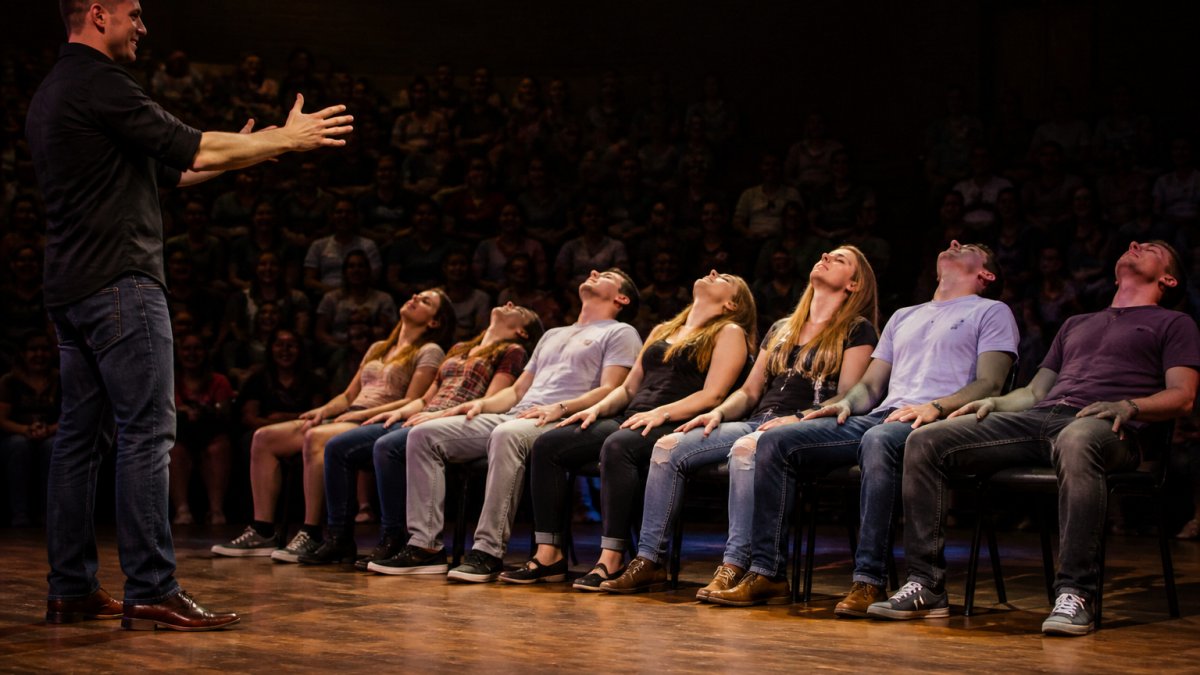
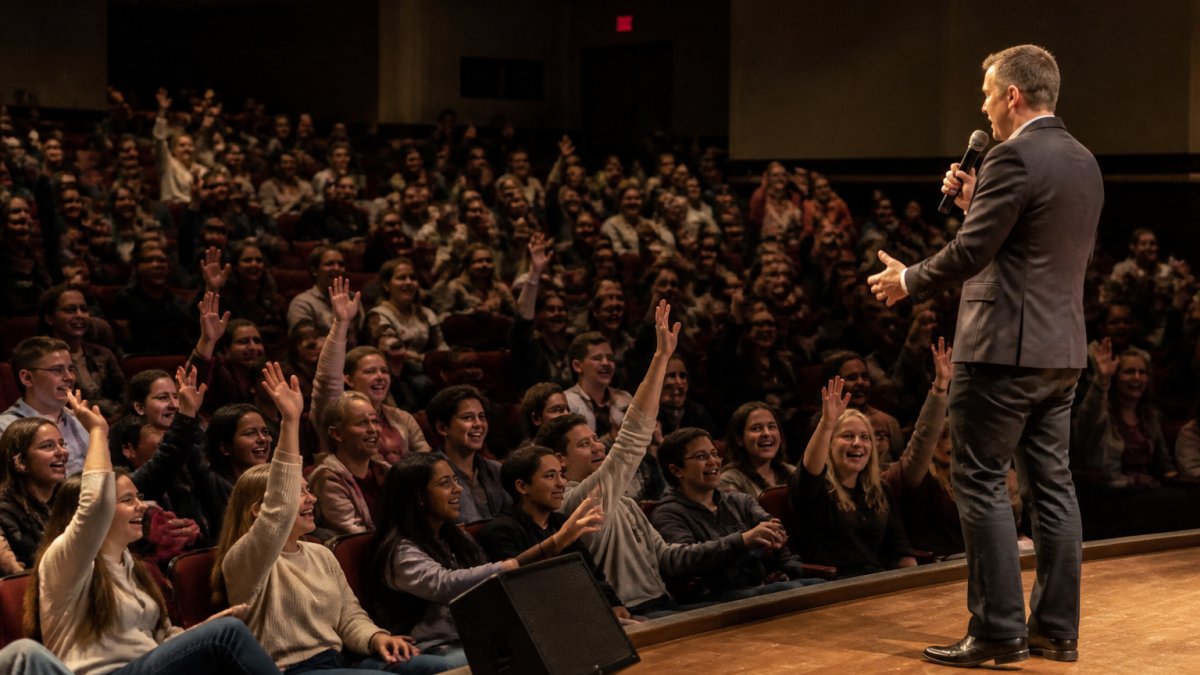
Table of Contents

Last Updated: October 19, 2026

Why a Stage Hypnotist Belongs on Your College Event Calendar

A stage hypnotist is a live performer who guides willing volunteers from the audience into a relaxed, focused state and then leads them through comedic scenarios on stage.

A stage hypnotist performs for an enthusiastic crowd of students in a college auditorium.

Campus entertainment is a crowded field. DJs, comedians, and novelty acts all compete for the same welcome week slot. Comedy hypnosis stands apart because volunteers drive the show. Students watch their friends, not a stranger.

That built-in suspense keeps phones in pockets. The show also scales to different crowds, from a 400-seat auditorium to a full arena.

This guide from Dusty Satterlee walks you through the full booking process, from first inquiry to show night. Below, we break down the seven steps, the questions to ask, and the logistics most planners forget.

Step-by-Step: How to Book a Stage Hypnotist for College

Booking follows a clear path: define goals, research, inquire, vet, contract, prepare, and execute. Most colleges need six to twelve weeks of lead time for a weekday show and twelve to sixteen weeks for a high-demand welcome-week or graduation date. Here is how to book a stage hypnotist for college without missing a detail.

1. Define Your Event Goals and Audience

Start with the outcome you want. Is this opening week programming, a graduation party, or a mid-semester stress break? Each calls for a different tone and show length.

Also pin down your crowd size and venue type. A student activities board booking a 300-seat hall faces different needs than a campus-wide arena show. Write down three numbers before you contact anyone: expected attendance, maximum seated capacity, and your all-in budget ceiling. Those three numbers shape every quote you receive.

2. Research and Shortlist Performers

Look for performers with real campus experience. A college audience is different from a corporate crowd or a comedy club room.

  • Watch full performance clips, not just highlight reels
  • Check whether the performer has played colleges before
  • Confirm the show stays clean and tasteful for a student audience
  • Look for a performer who lists campus clients, orientation programs, or student activities boards

Shortlist three performers, not one. A single quote gives you no leverage and no comparison point.

3. Send a Booking Inquiry and Request a Quote

Send a booking inquiry with your event date, venue, audience size, and budget range. Ask for a free quote and check availability early.

A complete inquiry includes: event name and date, start and end time, venue name and address, expected attendance, stage dimensions, whether sound and lighting are provided, and your decision timeline. Performers quote faster and more accurately when those details are in the first email.

Performer pricing depends on date, travel, and show length. Request a written quote rather than guessing at cost, and ask whether the quote includes travel, lodging, and any AV surcharges.

4. Vet and Compare Your Options

Compare at least two or three performers. Look at show format, references, and how quickly each responds.

Use a simple scorecard so the decision is not a gut call:

Criterion What to Check
College references At least two campus bookers from the past year
Full video A complete show, not a 60-second reel
Audience fit Clean material, volunteer consent, diverse crowd experience
Technical needs Stage size, sound, lighting, microphones, setup time
Contract terms Deposit, cancellation, backup performer, payment schedule
Responsiveness Reply time and willingness to answer questions

A common mistake is choosing on price alone. A cheaper show that falls flat costs more in the long run than a slightly higher fee for a memorable event.

Pro Tip
Ask each performer for a reference from a college booker they have worked with in the past year. A quick call with that planner tells you more than any promo video.

5. Confirm the Date and Sign the Contract

Lock the event date in writing. The contract should cover the fee, deposit, cancellation policy, and what happens if the performer gets sick.

Read the cancellation and backup terms closely. You want a clear plan if the performer cannot make it. Confirm the deposit amount and due date, the final payment date, whether the deposit is refundable, and who provides backup if the performer is unavailable. Route the contract through your student organization’s advisor or campus procurement office before anyone signs.

6. Prepare Your Venue and Promote the Show

Confirm stage size, seating, lighting, and sound. Send the performer your AV setup details so show day runs smoothly.

On promotion, start two to three weeks out. Use social posts, campus email, and posters to build buzz. Ask the performer for a short promo clip and a one-paragraph bio you can use in student newsletters.

7. Execute a Smooth Show Day

Have a staff member meet the performer on arrival. Set up water, a private warm-up space, and a clear line to the stage.

Brief your volunteers and staff on audience flow. A smooth check-in keeps the energy high before the show even starts. Assign one student leader as the performer’s point of contact for the entire day so questions do not get lost between departments.

Stage Hypnotist Booking Checklist for Student Activities

Use this checklist to track every step from first contact to final applause. It keeps student activities boards and campus departments on the same page.

Book A Show →

Step Task Timing
1 Set event goals, date, and budget 12 weeks out
2 Shortlist three performers 10 weeks out
3 Send booking inquiries and request quotes 9 weeks out
4 Vet references and compare options 8 weeks out
5 Sign contract and pay deposit 6 weeks out
6 Confirm venue, AV, and safety plan 4 weeks out
7 Launch promotion 3 weeks out
8 Confirm show-day logistics 1 week out
  • Budget approved by your student organization
  • Venue booked and stage dimensions confirmed
  • AV and lighting requirements shared with performer
  • Contract signed and deposit paid
  • Campus safety and accessibility plan reviewed
  • Promotion schedule set

Questions to Ask a Stage Hypnotist Before You Commit

Ask direct questions before you sign. The answers separate a seasoned campus performer from an unknown act.

  1. How many college shows have you performed?
  2. How do you keep the material tasteful for a student audience?
  3. What is your show length and format?
  4. Do you bring your own sound equipment?
  5. What is your cancellation and backup plan?
  6. Can you provide recent college references?

The best performers welcome these questions. Vague answers are a warning sign.

Watch Out
Skipping the reference check is the most common booking mistake. Planners who book on a promo video alone often end up with a show that looks great online but feels flat in person.

College Hypnosis Show Length: How Long Should It Run?

A college hypnosis show usually runs 60 to 90 minutes. That window gives enough time for volunteer selection, several comedy scenes, and a strong close without losing the crowd.

Shorter sets of 45 minutes work for assemblies and tight schedules. Longer shows suit welcome week headliners and evening events.

Match length to your slot. A 90-minute show at 2 p.m. on a class day will lose students to their next commitment.

What to Expect from a College Comedy Hypnosis Show

A college comedy hypnosis show blends audience participation, comedy, and stage hypnosis into one interactive performance. Volunteers come up from the crowd, and the humor comes from their reactions, not from anyone being embarrassed.

Expect a clean, high-energy format. A skilled performer reads the room and dials the intensity up or down.

Audience engagement is the whole point. Students cheer for their friends, and the shared experience becomes the thing they talk about all week.

At Dusty Satterlee, we build every college show around a tasteful, elegant style. That approach keeps the material appropriate for diverse student bodies while still delivering a memorable event.

Budgeting and Campus Logistics: What Student Organizations Need to Know

Understanding Costs and Getting the Most from Your Budget

Performer fees vary by date, travel distance, and show length, so request a quote rather than working from guesswork. Build your budget around the full picture, not just the performer fee.

  • Performer fee and deposit
  • Travel and lodging, if the performer is coming from out of town
  • Venue rental and staffing
  • AV and lighting
  • Promotion costs
  • Contingency of roughly 10 percent for last-minute needs

A common pattern is that the performer fee is the largest single line, with travel and lodging second when the performer is coming from out of state. Ask each performer whether the quote is all-in or whether travel, lodging, and AV are billed separately. That one question prevents most budget surprises.

To stretch your budget, book early and consider pairing the show with an existing campus event. A shared venue and shared promotion cut costs fast. If your student organization uses a campus procurement process, confirm whether the performer needs to be an approved vendor, whether a purchase order is required, and how long payment takes after the show.

Venue, AV, and Safety Planning

Confirm the stage can hold the performer and volunteers safely. Check lighting, sound, and clear audience sightlines.

A typical college show needs a stage at least 20 feet wide and 12 feet deep, a wireless handheld microphone plus a backup, a sound system the performer can plug into, and basic stage lighting the performer can see the audience under.

Plan for accessibility. Reserve seating for students with mobility needs and keep aisles clear. Confirm accessible routes to the stage for volunteers and an accessible viewing area for attendees.

On safety, brief campus staff on audience flow and volunteer handling. A clear plan protects students and keeps the show running on time. Confirm with your campus events office whether the show requires event registration, security staffing, or a risk review, and whether alcohol-free programming rules apply to your venue.

Key Takeaway
The shows that get remembered are the ones planned like events, not booked like favors. Lock the date early, confirm the AV, and brief your staff. The performance takes care of itself.

Conclusion

Booking campus entertainment takes real work, and a flat show wastes both budget and student attention. Dusty Satterlee brings over 15 years of experience, a tasteful performance style, and a show built to fill seats and get students talking. Get started with Dusty Satterlee and book a show your campus will remember.

Frequently Asked Questions

How much does it cost to hire a stage hypnotist for a college?

Pricing for a stage hypnotist varies based on factors like the performer’s experience, travel distance, show length, and whether it’s a single performance or part of a larger event. Colleges should request a personalized quote directly from the performer. Many hypnotists offer packages for student activities, and some may adjust fees for smaller schools or non-profit events. Always ask for a detailed breakdown and confirm what’s included, such as sound equipment or promotional materials.

What should a college ask a stage hypnotist before booking?

Ask about their experience with college audiences, their approach to audience participation and consent, and how they handle sensitive topics. Inquire about technical requirements, cancellation policies, and whether they carry liability insurance. Request references from other colleges or student organizations. Also ask how they tailor the show to your campus culture and whether they offer any educational or motivational components. A professional will welcome these questions and provide clear answers.

How long should a college hypnosis show be?

A typical college comedy hypnosis show runs 60 to 90 minutes, which fits well into most campus event schedules. Some performers offer shorter 45-minute sets for opening week or assembly slots, while full evening shows may include an intermission. Discuss your event timeline with the hypnotist to find the right length. Consider whether you want time for audience Q&A or a meet-and-greet after the performance, and build that into your schedule.

Is stage hypnosis appropriate for a college orientation?

Yes, stage hypnosis can be a highlight of orientation or welcome week when planned thoughtfully. Choose a performer who emphasizes audience participation, consent, and tasteful humor. Discuss your student body’s diversity and any sensitivity concerns upfront. Many colleges use comedy hypnosis shows to break the ice and create shared memories. Ensure the performer has experience with college audiences and a clear understanding of your campus values, and consider offering a brief informational session beforehand to address any misconceptions.

Table of Contents

Last Updated: October 18, 2026

Why Awkward Comedy Derails Events (And How to Prevent It)

Awkward comedy is humor that lands wrong: a joke that offends, confuses, or exposes a guest, turning a room quiet and a host red-faced.

Here is the good news: awkward comedy is preventable. Below, we break down the exact process we would use to keep any event funny without the fallout, from audience assessment to real-time recovery.

The stakes are higher than most planners think. A single off-color joke at a school assembly can generate parent complaints. A poorly read room at a corporate retreat can undercut a morale budget.

Watch Out
The most common mistake is booking a performer based on a highlight reel alone. Reels show the best 90 seconds of a hundred shows. Ask for full-length footage of a similar event instead.

Assessing Your Audience and Event Context Before You Book

Audience assessment is the process of matching humor style to who is in the room, why they are there, and what boundaries apply. Do this before you shortlist a single performer.

Most ranking advice tells you to “know your audience.” That is not a method.

Half one: the audience profile. Write these down, because performers will ask for them and because vague answers produce vague material:

  • Age range and grade levels represented, including whether minors and adults will share the room
  • Cultural, language, and religious diversity, and whether any group is large enough to be a target of “us versus them” humor
  • Whether attendance is voluntary or mandatory, mandatory crowds laugh later and judge harder
  • Whether supervisors, parents, executives, or clients are present, and who signs off on complaints
  • Sensitivities specific to your community this year: recent layoffs, a merger, a loss, a controversial policy, a local news event
  • Physical layout: theater seating, banquet rounds, a cafeteria, a gym floor, because sightlines and table talk change how a joke travels

Half two: the event context. The same joke can be safe at 9 p.m. and radioactive at 9 a.m. Score the event on five dials before you choose material:

  1. Purpose. Celebrate, motivate, raise money, educate, or commemorate. Commemoration and education tolerate the least humor; celebration tolerates the most.
  2. Formality. Black-tie gala, business casual luncheon, school assembly, or after-prom lock-in. Formality sets the ceiling on edginess, not the floor.
  3. Shared history. Does the audience share inside context, a company, a graduating class, a team, or are they strangers at a conference? Shared context allows specific, insider humor; a mixed room requires universal material.
  4. Stakes. Is there a donor in the room, a press photographer, a recording, a performance review tied to the event? Higher stakes mean narrower material.
  5. Emotional temperature. Is the room arriving from a long awards segment, a somber keynote, or an open bar? Temperature tells you whether to open warm, cool, or neutral.
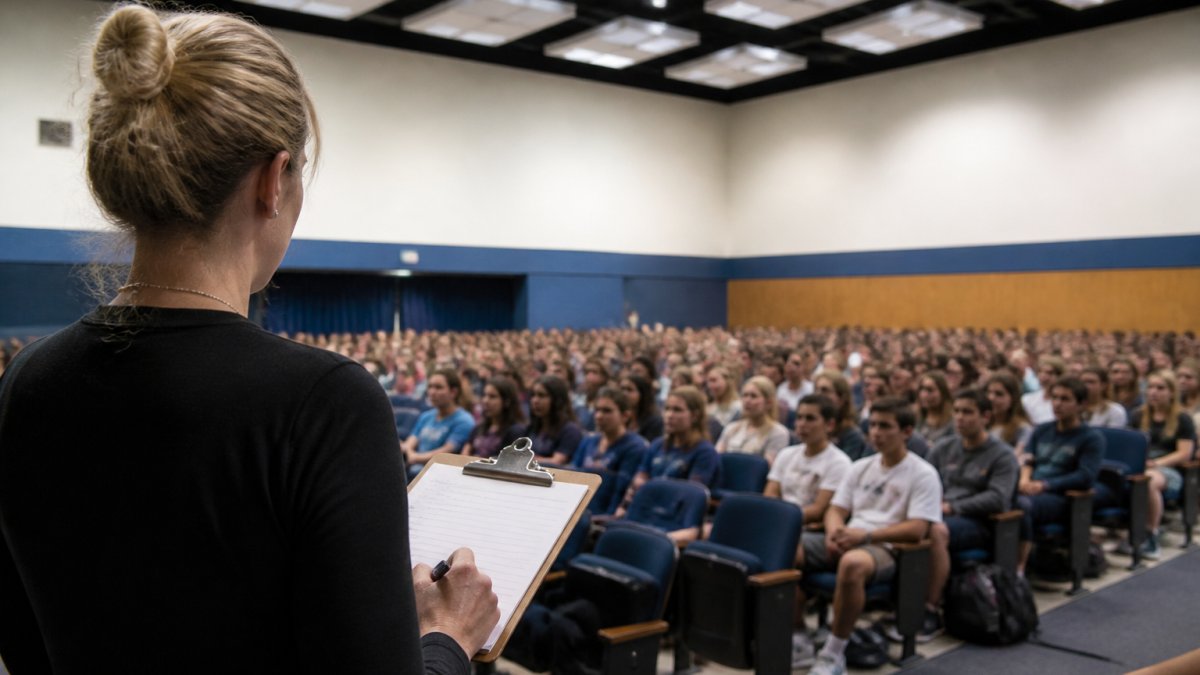
An event planner standing at the back of a school auditorium, observing a seated student audience while holding a clipboard and notes

Once the brief is written, use it as a filter. For every proposed joke or bit, ask three questions: Who could this embarrass?

For school events, check your district’s policies on appropriate content and guest performers before you book. For corporate events, ask HR or legal whether the event is recorded or streamed, because a joke that works live can become a permanent artifact.

Pro Tip
Hand your one-page brief to every performer you shortlist and ask them to describe two bits they would cut for your room. A performer who can name the cuts has actually read the brief.

This is also the framework non-comedians can use directly. If you are an emcee, a manager, or a presenter who plans to open with a joke, run your own material through the same five dials. You do not need a stage career to avoid awkward comedy; you need a written brief and the discipline to filter against it.

Questions to Ask a Comedian Before Booking

The right questions separate a professional from a risk. Ask these before you sign anything, and listen for specific answers rather than reassurances.

  1. What is your material style, and can I see a full show, not a highlight reel?
  2. How do you adapt a set for a school versus a corporate audience?
  3. What is your policy on offensive jokes and audience volunteers?
  4. How do you handle heckling or a joke that falls flat?
  5. What is your backup plan if you are ill or travel fails?
  6. Can you share references from events like ours?

That last one matters more than most planners realize. A performer who has worked your event type repeatedly will already know the boundaries. One who has not will be learning them on your stage.

For anyone considering comedy stage hypnosis or mentalism, ask how volunteers are selected and how the performer protects participants from embarrassment. A tasteful performer treats volunteers with care, and that care shows in the answers you get.

Why Clean Comedy for Corporate Events Protects Your Program

Clean comedy is humor that avoids profanity, sexual content, and material that targets protected groups. For corporate events, it is not about being prudish. It is about protecting the program you spent months building.

Think about who is in the room. Employees from every department. Possibly clients. Possibly a recording that ends up on social media. One crude joke can overshadow the award you just handed out.

Clean comedy for corporate events also travels better. Jokes about shared office life, travel, and meetings land with nearly everyone. They do not require the audience to share a background.

Pro Tip
Ask your performer to describe their cleanest 10 minutes. If they cannot pivot to fully clean material on request, that tells you something about their range.

The same logic applies to student audiences. Inclusive humor means jokes that invite everyone in rather than punching down. It is a skill, and it is worth asking about directly.

Event Comedian Performance Length: Setting a Set That Fits

Event comedian performance length should match the slot, not the performer’s ego. A tight 20 to 30 minutes beats a meandering hour every time.

Use this simple planning table:

Book A Show →

Event Type Suggested Set Length Why It Works
School assembly 20-30 minutes Fits class schedules and holds teen attention
Post-prom or late-night 30-45 minutes Energy is high; keep momentum
Corporate luncheon 20-25 minutes Guests are eating and distracted
Fundraising gala 15-20 minutes Protects the giving program
Full evening feature 45-60 minutes Only with a proven, polished act

Build the run of show around the set, not the reverse. Give the performer a hard stop and a clear cue. Professionals respect a firm out-time, and it protects the rest of your program.

Also plan the transition. A cold open after a long awards segment rarely works. A short host introduction that sets expectations warms the room and signals what is coming.

Comedy Show Audience Participation Tips for Hosts

Audience interaction is what separates a live show from a video. Handled well, it creates the memorable moments people talk about. Handled poorly, it creates the awkward ones.

Here is how hosts keep participation safe and fun:

  • Brief the performer on anyone who should not be called up, such as a shy guest of honor.
  • Set ground rules out loud: volunteers can say no, and the show moves on.
  • Seat volunteers where they can exit easily, never trapped in a tight row.
  • Keep the host nearby to step in if a bit drags.
  • Never surprise a VIP with a bit they did not agree to.

Consent is the whole game. A performer who asks before pulling someone up, and who reads a “no” gracefully, will keep the room on their side. One who pressures a reluctant guest will lose it.

For school events, decide in advance whether students can volunteer and how they will be selected. Clear rules prevent hurt feelings and keep the focus on the fun.

What to Do When a Joke Falls Flat: Recovery in Real Time

Recovery is a skill, and the best performers plan for it. When a joke dies, the worst move is to keep digging.

First, read the signal correctly. A flat joke is not the same as an offended room. Watch for these signals that a bit is not landing:

  • The laugh comes late or not at all, and the next line gets a smaller response
  • The room goes quiet in the wrong way, not attentive quiet, but checking-phones quiet
  • Guests look at each other instead of the stage
  • Someone visibly stiffens, crosses their arms, or checks out
  • A table starts its own conversation while the performer is still talking

If the signal is a missed laugh, recover and continue.

Recovery scripts for the performer. These are the lines that buy a beat without drawing more attention to the miss:

  • The light acknowledgment: “That one sounded better in my head. Moving on.” Then move on, immediately.
  • The self-deprecating pivot: “I’ll be here all week, apparently not.” Then change subject.
  • The callback setup: “Remember that joke? Neither does the room. Here’s one that works.” Use sparingly; callbacks to a dead bit can revive the awkwardness.
  • The graceful abandon: “Let’s try something else.” No explanation, no apology, no blame.

What not to say: never blame the audience (“Tough crowd”), never explain why the joke was funny, never repeat the punchline louder, and never apologize for the act mid-show.

Recovery protocol for hosts and emcees. If you are hosting and the performer is struggling, your job is to protect the room without upstaging the act:

  1. Stay calm and keep smiling. Your face is the room’s temperature gauge.
  2. Do not rush the stage. A host who rescues too early signals panic to the audience.
  3. Prepare one neutral transition line in advance, for example, “Let’s give another round of applause and keep the program moving”, and use it only if the performer signals for help or the bit has clearly crossed a line.
  4. If a guest is visibly uncomfortable, address it privately after the show, not from the microphone.
  5. Save any debrief for after the event. Never critique the act in front of the room.

Recovery for non-comedian presenters. If you told a joke in a speech and it died, the same rules apply at smaller scale. A single line, “Anyway, back to the point”, is enough.

Key Takeaway
The mark of a seasoned performer is not a flawless set. It is a fast, graceful recovery. Ask about it in the booking conversation, and ask the performer to walk you through a real example.

This is where experience shows. At Dusty Satterlee, our stage hypnosis and mentalism shows are built around keeping every volunteer comfortable, which is exactly the skill that prevents awkward comedy from ever taking hold.

Frequently Asked Questions

How can you tell whether a comedian is right for your event?

Watch full-length footage, not just highlight reels, and check whether the performer has worked your type of audience before. Ask for references from schools, companies, or nonprofits similar to yours. Confirm the material is clean comedy for corporate events or student assemblies if that is your setting. A performer who tailors content to your group and can describe how they read a room is a safer bet than one who only sends a polished promo clip.

How do you keep event comedy appropriate for a mixed audience?

Set expectations in writing before the event. Tell the performer the age range, the organization’s values, and any topics that are off-limits. Request clean comedy for corporate events when the crowd includes employees, families, or students. Ask how the performer handles heckling and sensitive subjects. A professional will welcome these boundaries and can describe past events where they adjusted material mid-show to keep the room comfortable.

How long should a comedy set be at an event?

Event comedian performance length depends on the format. A standalone comedy show usually runs 45 to 60 minutes, while a set inside a larger program, such as an awards dinner or assembly, often works best at 20 to 30 minutes. Ask the performer how they pace a shorter set and whether they build in audience participation. Confirm the length in the contract so the rest of your schedule stays on track.

What should you do if a comedy performance makes guests uncomfortable?

Have a plan before the show starts. Brief the performer on boundaries and designate one staff member who can signal the host if content crosses a line. If a joke lands badly, the host can redirect with a quick transition or a light comment that moves the program forward. After the event, collect feedback and share it with the performer or booker so future bookings avoid the same material.

Table of Contents

Last Updated: October 17, 2026

Why Post Prom Entertainment Makes or Breaks the Night

Post prom entertainment is the difference between a night students talk about for years and one they forget by Monday. At Dusty Satterlee, we have spent more than 15 years watching what keeps a gym full of high school seniors off their phones and what sends them home early: passive programming loses the room.

Students arrive at post prom tired from the dance, wired from the music, and hungry for something to do. If the next two hours are a DJ and a snack table, they drift. If the next two hours give them a reason to stay, they stay.

The best post prom entertainment ideas pull people in, create a shared memory, and give quiet students a role and loud students a stage.

This guide breaks down the options that work, how to pair them, and how to run the night so it holds together, games, performers, food, safety, and budget.

Post Prom Party Ideas That Keep Students Moving

Movement is the cheapest engagement tool you have. Students who are physically active stay alert, stay social, and stay on site.

A strong post prom party builds in at least two movement zones: a high-energy dance floor or open activity area, and a lower-key lounge, photo corner, or quiet room for students who need a break.

The best post prom party ideas rotate students through both. Here is how that looks in practice:

  • Dance areas with a student-run playlist alongside a DJ
  • Photo booth or 360 video station for groups rotating in and out
  • Karaoke corner for the brave
  • Open gym or outdoor space for pickup games
  • Bonfire or stargazing area for a calmer crowd
Pro Tip
Put your photo experience near the entrance. Groups stop there first, take a picture, and the night starts with momentum instead of an awkward lull.

Pair a high-energy anchor with a low-key one. Students who do not dance still need somewhere to be: a coffee bar, a movie room, or a scavenger hunt route through the venue.

The goal is simple: no dead corners. Every zone should have a reason to walk into it.

Post Prom Games and Group Activities

Games work best when they are short, visible, and easy to join mid-round. Long tournaments lose the crowd. Quick rounds pull people in.

Here is a practical rotation that keeps a room busy without a single long commitment. Times assume a 400-student event with a 10 p.m. to 2 a.m. window; scale the number of stations up or down with attendance.

Time Activity Format Staff Needed
10:00-10:30 Musical chairs Three rounds max, student emcee 1 emcee, 1 spotter
10:15-11:15 Scavenger hunt Printed photo-challenge list, teams of 4-6 2 judges at a check-in table
10:45-11:30 Group trivia Teams of 4-6, three rounds 1 host, 1 scorekeeper
11:30-12:15 Minute-to-win-it stations 4-6 side stations, rotate every 10 minutes 1 volunteer per station
All night Karaoke Separate room, sign-up sheet 1 emcee, 1 tech
12:30-1:15 Open mic or improv games Theater crowd, low pressure 1 host

Group-size math. Plan one game station for every 40-50 students who are not on the dance floor or in line for food.

Rotation mechanics. Run activities in 20-30 minute blocks with a visible schedule posted at the door and announced by the emcee, so students can join any block late without feeling lost.

Inclusion notes. Not every student wants to perform or compete. Build in at least two low-pressure options: a paper trivia table, a puzzle or board-game lounge, and a quiet room with seating.

Watch Out
Skip any game that singles out one student in front of the whole room without their buy-in. Humiliation comedy reads as bullying at a school event, and it will end up in a parent complaint by Monday.

Keep prizes small and plentiful. Candy, gift cards, and school swag do more work than one big prize nobody wins. Budget roughly $2-$5 per prize and plan for 30-50 prizes across the night; a $150-$250 prize pool covers most events this size.

Staffing and setup. Assign one volunteer per station plus a floater to reset supplies and manage lines.

Live Entertainment: Hypnotists, Mentalists, and Performers

A headline performer turns a decent post prom into a story students retell, giving the whole night a center of gravity.

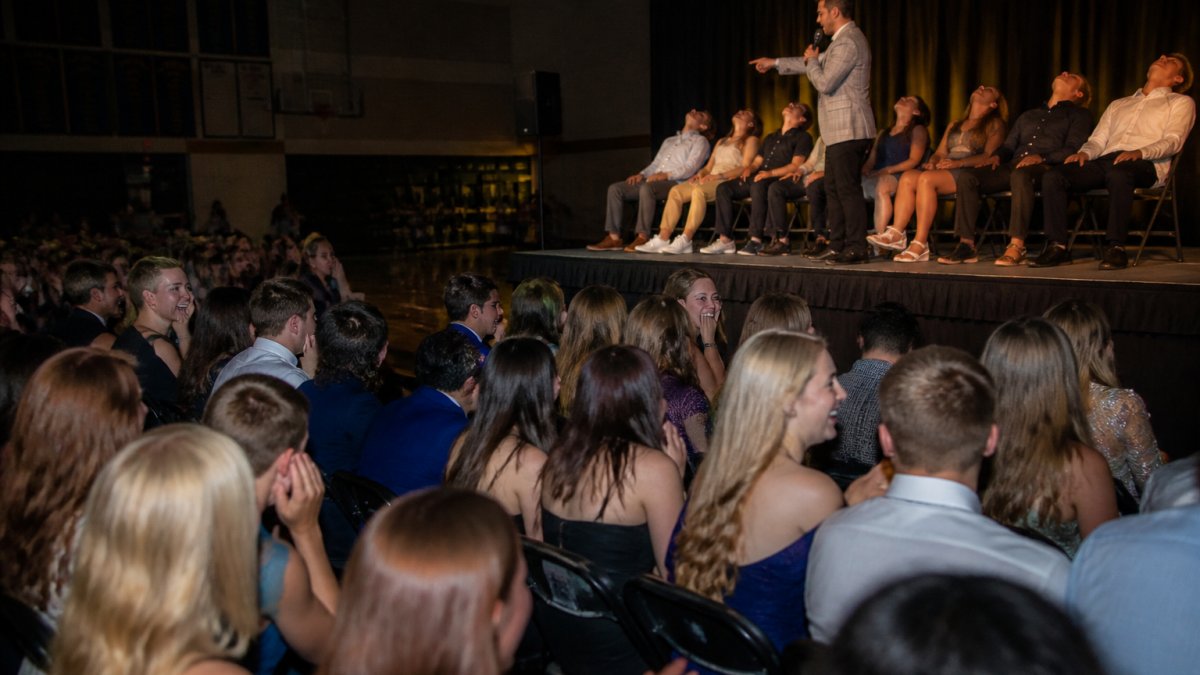
A stage hypnotist performing in front of a large audience of high school seniors at a school event, with volunteers on stage and students laughing in the crowd, warm stage lighting against a darkened gym

Live entertainment options for a school event include:

  • Comedy stage hypnosis with student volunteers
  • Mentalism and mind-reading shows that pull in audience members
  • Improv comedy troupes that work clean
  • Hypnotist and mentalist combos for a full-length show
  • Caricature artists and fortune tellers as roaming or station acts
  • DJ and live music as the backdrop between acts

The show should sit in the middle of the night, not at the end, after the food and before late-night activities, to give the crowd a second wind.

What most guides miss is the volunteer question. A good performer builds the show around willing participants, never ambush. Ask any act how they handle consent and dial back intensity for a school audience, the answer tells you everything.

This is where Dusty Satterlee fits. Our comedy stage hypnosis and mentalism shows are built for school audiences, with a tasteful, elegant style that keeps the material clean and inclusive.

Key Takeaway
Book your headline act for the middle of the night, not the finale. Students leave early when the best thing happens last.

Safe After Prom Ideas: Supervision, Transportation, and Inclusion

Safety is not the boring part of planning. It is the part that lets everyone relax and enjoy the night.

The safest after prom ideas share three traits: clear supervision, planned transportation, and activities every student can join. Get those right and the fun takes care of itself.

Book A Show →

Supervision. Use a ratio your district is comfortable with, and station adults at every exit and activity zone.

Transportation. Many post prom events run late into the night. Arrange buses or a shuttle loop so no student drives tired. Publish the pickup and drop-off times in advance and repeat them at the door.

Inclusion. Build in quiet space, alcohol-free and sensory-friendly zones, and activities that do not require dancing or performing. Students who do not drink, do not dance, or need a break should still have somewhere to go.

You can find general event safety guidance through FEMA’s event safety resources and student-event planning standards from the National Association of Secondary School Principals. Use them as a checklist, not a script.

Watch Out
Never let the night end with students driving home at 3 a.m. after hours of activity. Fatigue is the real risk, and a shuttle loop solves it.

Post Prom Entertainment Ideas on a Budget

You do not need a big budget to run a night students remember, just smart sequencing and a few high-impact anchors. Most committees spread a modest budget evenly across every idea; the events that work spend on one or two anchors and keep everything else simple and student-run.

Here is how we would split a budget across three common event sizes. Pricing will vary by date, region, and contract terms, always get written quotes.

Line Item 200 Students 400 Students 600 Students
Headline performer (hypnotist, mentalist, or improv) $1,500-$3,000 $2,500-$4,500 $3,500-$6,000
DJ or student playlist + sound $400-$900 $600-$1,200 $900-$1,800
Photo booth or 360 video (3-4 hours) $500-$900 $700-$1,200 $1,000-$1,800
Food and drink stations $600-$1,200 $1,200-$2,400 $1,800-$3,600
Games, prizes, and supplies $150-$300 $250-$500 $400-$800
Decor and signage $100-$250 $200-$400 $300-$600
Approximate total $3,250-$6,550 $5,450-$10,200 $7,900-$14,600

Where to spend and where to save. Spend on the one thing students will talk about on Monday: a headline performer with a clean, school-appropriate show.

Lean on student volunteers. A student emcee, DJ, and photo team cost nothing and build ownership, students who help run the night stay engaged and bring friends to their station. Assign roles two to three weeks out with a one-page brief.

Stretch the budget with donations. Ask local businesses for prize donations, many will contribute gift cards for a program mention. Ask six to eight weeks out with a one-page letter covering your event date, expected attendance, and recognition details.

Pro Tip
Price the headline act first, then build the rest of the budget around what is left. If you book the photo booth and food first, you will not have enough left for the anchor that makes the night memorable.

Trade-offs to decide up front. If your budget is under about $3,000 for a 200-student event, choose one anchor (performer or photo experience) and run everything else with volunteers and donated supplies. If your budget is over $10,000 for a 400-student event, add a second anchor, a roaming caricature artist or fortune teller, rather than upgrading the food. Students remember experiences, not menus.

How to Choose and Book the Right Entertainment

Booking entertainment is where good planning pays off or falls apart. Ask the right questions before you sign.

Start with these criteria:

  • Experience with school audiences. Ask for references from high schools and colleges.
  • Content review. Request a sample of the material or a past recording.
  • Consent and participation. Confirm how volunteers are chosen and how the show stays tasteful.
  • Backup plan. Ask what happens if the performer is sick or cannot make it.
  • Contract terms. Read the cancellation policy and deposit terms carefully.
  • Tech needs. Confirm sound, lighting, and stage requirements in writing.
Pro Tip
Ask for two references from schools your size, and call both. A performer who is genuinely good will have no trouble connecting you.

Also ask directly how the act keeps material inclusive and avoids jokes that single out any group. A professional will have a clear answer.

For a school event, we recommend booking a performer who treats the audience with respect and builds the show around willing volunteers. That is how Dusty Satterlee runs every show, and it is why schools bring us back.

Pricing depends on the date, the length of the show, and your group size, so reach out for a quote rather than guessing from a rate card.

Conclusion

The hardest part of post prom is not the budget or the venue. It is keeping a room full of tired students engaged until sunrise, and that comes down to the entertainment you choose.

Dusty Satterlee builds comedy stage hypnosis and mentalism shows designed for exactly that room: tasteful, inclusive, and built around student volunteers. With more than 15 years of experience and training under veteran hypnotist Michael C. Anthony, we bring a show that gets students talking on Monday.

Book a show with Dusty Satterlee and give your students a night they will actually remember.

Frequently Asked Questions

What is a post prom party and why is it important?

A post prom party is a supervised, alcohol-free event held after the school dance to give high school seniors a safe place to celebrate. It matters because it reduces the risk of impaired driving and gives students a structured, memorable night. Good post prom entertainment, such as games, photo booths, or a live hypnotist, keeps attendance high and students engaged. Organizers should plan activities that appeal to different interests and energy levels so everyone feels included.

What games are good for a post prom party?

Popular post prom games include musical chairs, scavenger hunts, karaoke, trivia, and minute-to-win-it challenges. Group activities like relay races and team trivia work well for large crowds, while quieter options like board games or a tea bar suit students who want a break. Mix high-energy and low-key games to match different moods. If you have a stage hypnotist, plan games around the show so the whole group stays involved.

How can a school make post prom fun on a budget?

Focus on a few high-impact activities rather than many small ones. A single headline entertainer, such as a comedy stage hypnotist or mentalist, can anchor the night, while low-cost options like a DIY photo booth, karaoke, and a coffee bar fill the schedule. Ask local businesses for donations, charge a small ticket fee, and recruit parent volunteers to cut costs. Pricing for professional entertainment depends on group size, date, and travel, so request a quote early.

How do you plan a safe post-prom event?

Safety starts with clear supervision, a secure venue, and a transportation plan. Require students to check in and out, keep chaperones visible, and arrange buses or parent carpools so no one drives tired. Choose age-appropriate, inclusive entertainment that avoids risky stunts or embarrassing volunteers. Confirm the performer’s insurance and cancellation policy, and share a run-of-show with staff. A well-planned event lets students relax and gives parents peace of mind.