
Table of Contents
- Why Awkward Comedy Derails Events (And How to Prevent It)
- Assessing Your Audience and Event Context Before You Book
- Questions to Ask a Comedian Before Booking
- Why Clean Comedy for Corporate Events Protects Your Program
- Event Comedian Performance Length: Setting a Set That Fits
- Comedy Show Audience Participation Tips for Hosts
- What to Do When a Joke Falls Flat: Recovery in Real Time
- Frequently Asked Questions
Last Updated: October 18, 2026
Why Awkward Comedy Derails Events (And How to Prevent It)
Awkward comedy is humor that lands wrong: a joke that offends, confuses, or exposes a guest, turning a room quiet and a host red-faced.
Here is the good news: awkward comedy is preventable. Below, we break down the exact process we would use to keep any event funny without the fallout, from audience assessment to real-time recovery.
The stakes are higher than most planners think. A single off-color joke at a school assembly can generate parent complaints. A poorly read room at a corporate retreat can undercut a morale budget.
The most common mistake is booking a performer based on a highlight reel alone. Reels show the best 90 seconds of a hundred shows. Ask for full-length footage of a similar event instead.
Assessing Your Audience and Event Context Before You Book
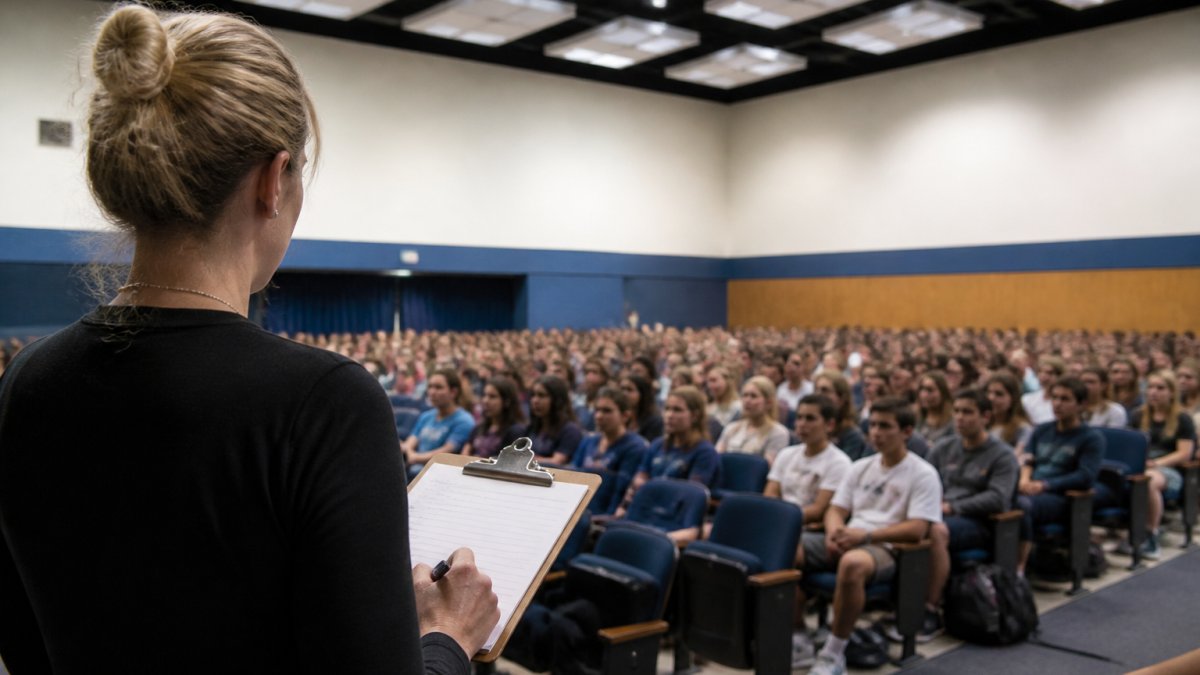
Audience assessment is the process of matching humor style to who is in the room, why they are there, and what boundaries apply. Do this before you shortlist a single performer.
Most ranking advice tells you to “know your audience.” That is not a method.
Half one: the audience profile. Write these down, because performers will ask for them and because vague answers produce vague material:
- Age range and grade levels represented, including whether minors and adults will share the room
- Cultural, language, and religious diversity, and whether any group is large enough to be a target of “us versus them” humor
- Whether attendance is voluntary or mandatory, mandatory crowds laugh later and judge harder
- Whether supervisors, parents, executives, or clients are present, and who signs off on complaints
- Sensitivities specific to your community this year: recent layoffs, a merger, a loss, a controversial policy, a local news event
- Physical layout: theater seating, banquet rounds, a cafeteria, a gym floor, because sightlines and table talk change how a joke travels
Half two: the event context. The same joke can be safe at 9 p.m. and radioactive at 9 a.m. Score the event on five dials before you choose material:
- Purpose. Celebrate, motivate, raise money, educate, or commemorate. Commemoration and education tolerate the least humor; celebration tolerates the most.
- Formality. Black-tie gala, business casual luncheon, school assembly, or after-prom lock-in. Formality sets the ceiling on edginess, not the floor.
- Shared history. Does the audience share inside context, a company, a graduating class, a team, or are they strangers at a conference? Shared context allows specific, insider humor; a mixed room requires universal material.
- Stakes. Is there a donor in the room, a press photographer, a recording, a performance review tied to the event? Higher stakes mean narrower material.
- Emotional temperature. Is the room arriving from a long awards segment, a somber keynote, or an open bar? Temperature tells you whether to open warm, cool, or neutral.
Once the brief is written, use it as a filter. For every proposed joke or bit, ask three questions: Who could this embarrass?
For school events, check your district’s policies on appropriate content and guest performers before you book. For corporate events, ask HR or legal whether the event is recorded or streamed, because a joke that works live can become a permanent artifact.
Hand your one-page brief to every performer you shortlist and ask them to describe two bits they would cut for your room. A performer who can name the cuts has actually read the brief.
This is also the framework non-comedians can use directly. If you are an emcee, a manager, or a presenter who plans to open with a joke, run your own material through the same five dials. You do not need a stage career to avoid awkward comedy; you need a written brief and the discipline to filter against it.
Questions to Ask a Comedian Before Booking
The right questions separate a professional from a risk. Ask these before you sign anything, and listen for specific answers rather than reassurances.
- What is your material style, and can I see a full show, not a highlight reel?
- How do you adapt a set for a school versus a corporate audience?
- What is your policy on offensive jokes and audience volunteers?
- How do you handle heckling or a joke that falls flat?
- What is your backup plan if you are ill or travel fails?
- Can you share references from events like ours?
That last one matters more than most planners realize. A performer who has worked your event type repeatedly will already know the boundaries. One who has not will be learning them on your stage.
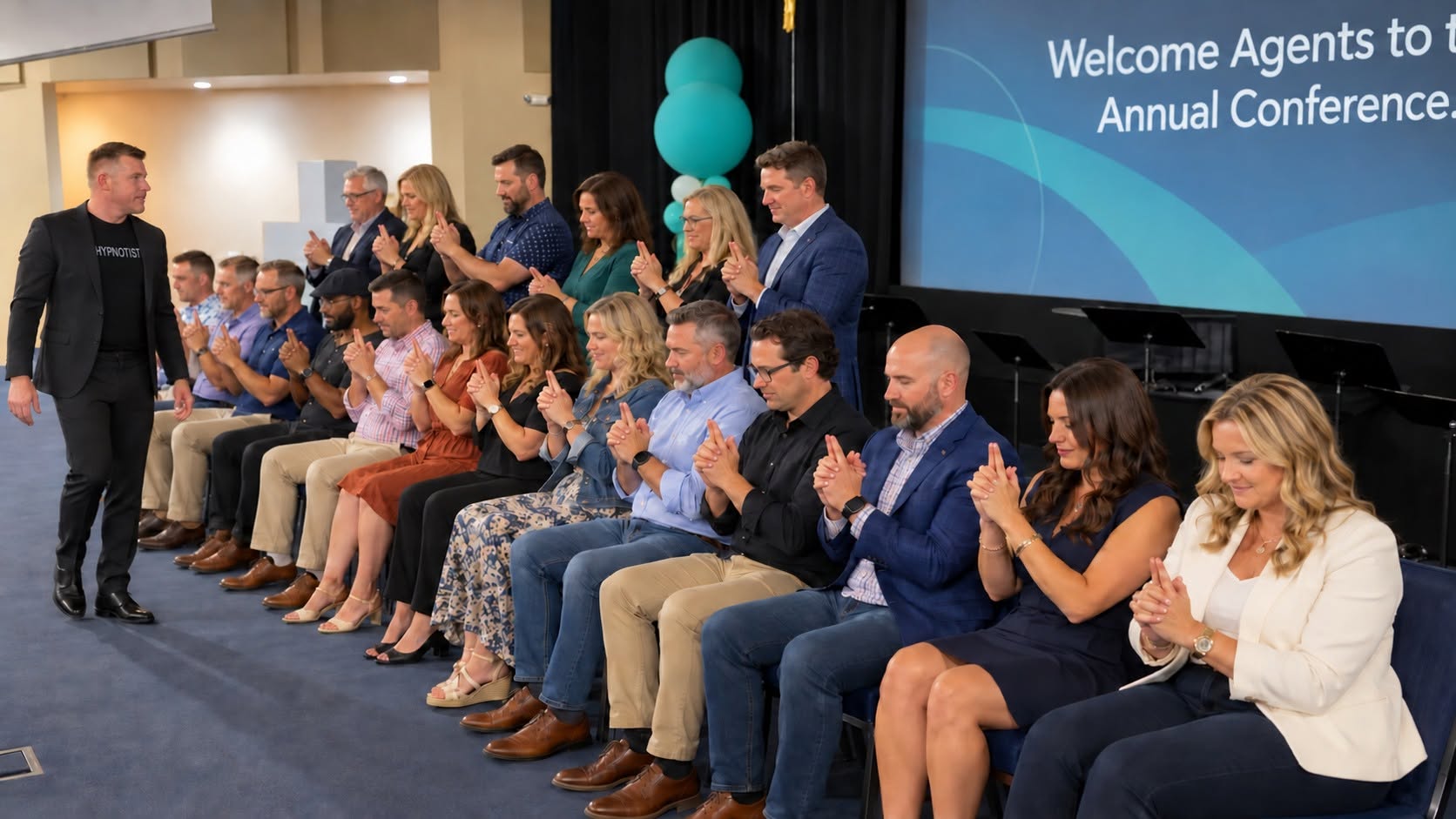
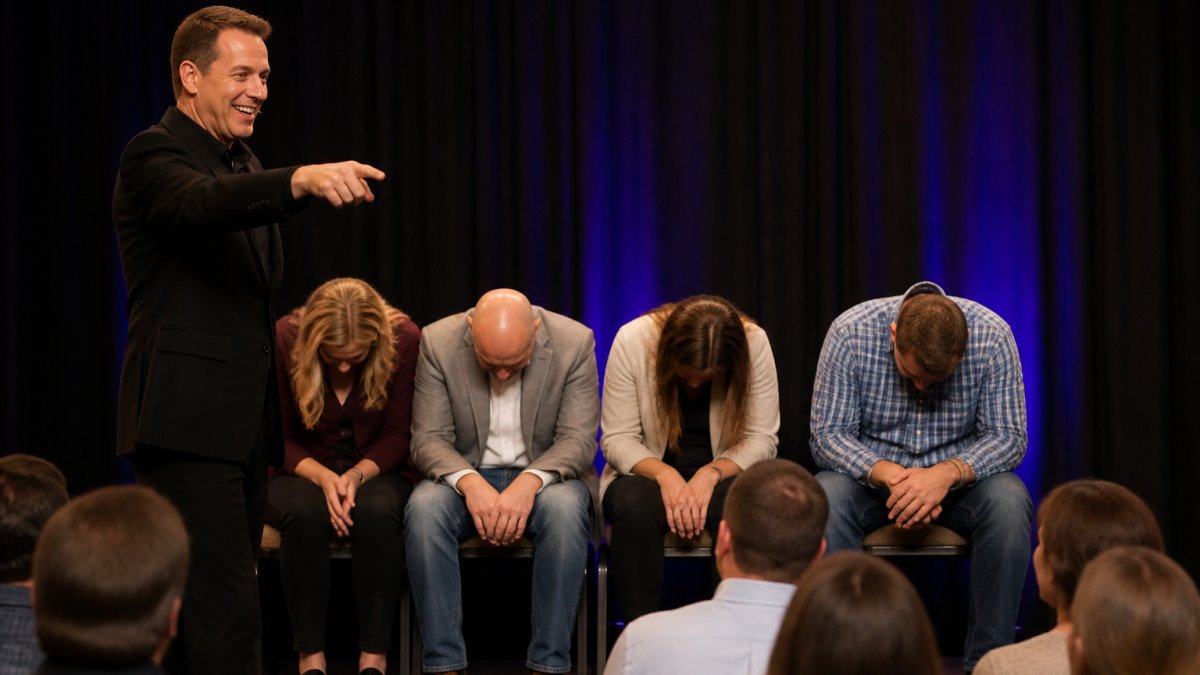
For anyone considering comedy stage hypnosis or mentalism, ask how volunteers are selected and how the performer protects participants from embarrassment. A tasteful performer treats volunteers with care, and that care shows in the answers you get.
Why Clean Comedy for Corporate Events Protects Your Program
Clean comedy is humor that avoids profanity, sexual content, and material that targets protected groups. For corporate events, it is not about being prudish. It is about protecting the program you spent months building.
Think about who is in the room. Employees from every department. Possibly clients. Possibly a recording that ends up on social media. One crude joke can overshadow the award you just handed out.
Clean comedy for corporate events also travels better. Jokes about shared office life, travel, and meetings land with nearly everyone. They do not require the audience to share a background.
Ask your performer to describe their cleanest 10 minutes. If they cannot pivot to fully clean material on request, that tells you something about their range.
The same logic applies to student audiences. Inclusive humor means jokes that invite everyone in rather than punching down. It is a skill, and it is worth asking about directly.
Event Comedian Performance Length: Setting a Set That Fits
Event comedian performance length should match the slot, not the performer’s ego. A tight 20 to 30 minutes beats a meandering hour every time.
Use this simple planning table:
| Event Type | Suggested Set Length | Why It Works |
|---|---|---|
| School assembly | 20-30 minutes | Fits class schedules and holds teen attention |
| Post-prom or late-night | 30-45 minutes | Energy is high; keep momentum |
| Corporate luncheon | 20-25 minutes | Guests are eating and distracted |
| Fundraising gala | 15-20 minutes | Protects the giving program |
| Full evening feature | 45-60 minutes | Only with a proven, polished act |
Build the run of show around the set, not the reverse. Give the performer a hard stop and a clear cue. Professionals respect a firm out-time, and it protects the rest of your program.
Also plan the transition. A cold open after a long awards segment rarely works. A short host introduction that sets expectations warms the room and signals what is coming.
Comedy Show Audience Participation Tips for Hosts
Audience interaction is what separates a live show from a video. Handled well, it creates the memorable moments people talk about. Handled poorly, it creates the awkward ones.
Here is how hosts keep participation safe and fun:
- Brief the performer on anyone who should not be called up, such as a shy guest of honor.
- Set ground rules out loud: volunteers can say no, and the show moves on.
- Seat volunteers where they can exit easily, never trapped in a tight row.
- Keep the host nearby to step in if a bit drags.
- Never surprise a VIP with a bit they did not agree to.
Consent is the whole game. A performer who asks before pulling someone up, and who reads a “no” gracefully, will keep the room on their side. One who pressures a reluctant guest will lose it.
For school events, decide in advance whether students can volunteer and how they will be selected. Clear rules prevent hurt feelings and keep the focus on the fun.
What to Do When a Joke Falls Flat: Recovery in Real Time
Recovery is a skill, and the best performers plan for it. When a joke dies, the worst move is to keep digging.
First, read the signal correctly. A flat joke is not the same as an offended room. Watch for these signals that a bit is not landing:
- The laugh comes late or not at all, and the next line gets a smaller response
- The room goes quiet in the wrong way, not attentive quiet, but checking-phones quiet
- Guests look at each other instead of the stage
- Someone visibly stiffens, crosses their arms, or checks out
- A table starts its own conversation while the performer is still talking
If the signal is a missed laugh, recover and continue.
Recovery scripts for the performer. These are the lines that buy a beat without drawing more attention to the miss:
- The light acknowledgment: “That one sounded better in my head. Moving on.” Then move on, immediately.
- The self-deprecating pivot: “I’ll be here all week, apparently not.” Then change subject.
- The callback setup: “Remember that joke? Neither does the room. Here’s one that works.” Use sparingly; callbacks to a dead bit can revive the awkwardness.
- The graceful abandon: “Let’s try something else.” No explanation, no apology, no blame.
What not to say: never blame the audience (“Tough crowd”), never explain why the joke was funny, never repeat the punchline louder, and never apologize for the act mid-show.
Recovery protocol for hosts and emcees. If you are hosting and the performer is struggling, your job is to protect the room without upstaging the act:
- Stay calm and keep smiling. Your face is the room’s temperature gauge.
- Do not rush the stage. A host who rescues too early signals panic to the audience.
- Prepare one neutral transition line in advance, for example, “Let’s give another round of applause and keep the program moving”, and use it only if the performer signals for help or the bit has clearly crossed a line.
- If a guest is visibly uncomfortable, address it privately after the show, not from the microphone.
- Save any debrief for after the event. Never critique the act in front of the room.
Recovery for non-comedian presenters. If you told a joke in a speech and it died, the same rules apply at smaller scale. A single line, “Anyway, back to the point”, is enough.
The mark of a seasoned performer is not a flawless set. It is a fast, graceful recovery. Ask about it in the booking conversation, and ask the performer to walk you through a real example.
This is where experience shows. At Dusty Satterlee, our stage hypnosis and mentalism shows are built around keeping every volunteer comfortable, which is exactly the skill that prevents awkward comedy from ever taking hold.
Frequently Asked Questions
How can you tell whether a comedian is right for your event?
Watch full-length footage, not just highlight reels, and check whether the performer has worked your type of audience before. Ask for references from schools, companies, or nonprofits similar to yours. Confirm the material is clean comedy for corporate events or student assemblies if that is your setting. A performer who tailors content to your group and can describe how they read a room is a safer bet than one who only sends a polished promo clip.
How do you keep event comedy appropriate for a mixed audience?
Set expectations in writing before the event. Tell the performer the age range, the organization’s values, and any topics that are off-limits. Request clean comedy for corporate events when the crowd includes employees, families, or students. Ask how the performer handles heckling and sensitive subjects. A professional will welcome these boundaries and can describe past events where they adjusted material mid-show to keep the room comfortable.
How long should a comedy set be at an event?
Event comedian performance length depends on the format. A standalone comedy show usually runs 45 to 60 minutes, while a set inside a larger program, such as an awards dinner or assembly, often works best at 20 to 30 minutes. Ask the performer how they pace a shorter set and whether they build in audience participation. Confirm the length in the contract so the rest of your schedule stays on track.
What should you do if a comedy performance makes guests uncomfortable?
Have a plan before the show starts. Brief the performer on boundaries and designate one staff member who can signal the host if content crosses a line. If a joke lands badly, the host can redirect with a quick transition or a light comment that moves the program forward. After the event, collect feedback and share it with the performer or booker so future bookings avoid the same material.