
Table of Contents
- Why Mentalism Shows for High Schools Beat Passive Entertainment
- What Makes a Mentalism Show for Students Age-Appropriate
- How Mentalism Show Length Fits a School Assembly Schedule
- High School Assembly Entertainment Logistics: Stage, Sound, and Lighting
- Questions to Ask a School Assembly Performer Before You Book
- Budget and Pricing Factors for Mentalism Shows
- Planning Timeline: From Show Selection to Showtime
- Frequently Asked Questions
Last Updated: October 21, 2026
Why Mentalism Shows for High Schools Beat Passive Entertainment
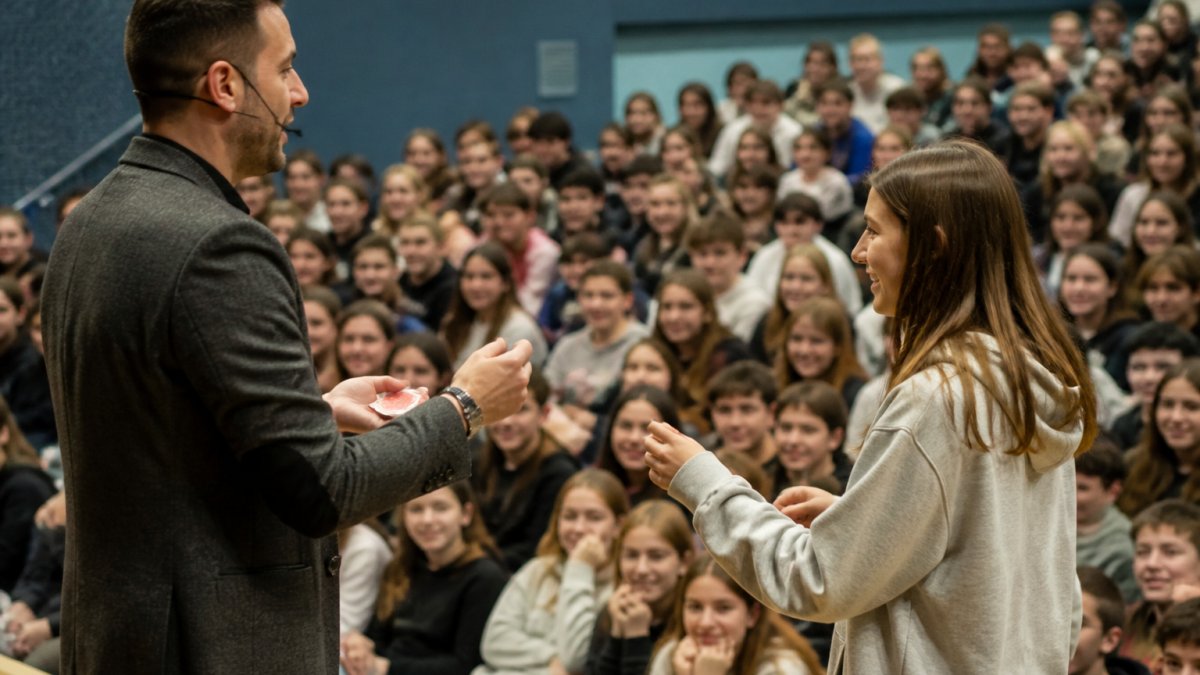
Mentalism shows for high schools are live performances built around mind-reading illusions, prediction stunts, and audience participation, and they work because students become part of the act rather than watching from a distance.
Most school assembly entertainment fails because students sit in rows while a performer talks at them for 45 minutes, and by Monday nobody remembers a thing.
Below, we break down how to choose a mentalism show that fits your students, auditorium, and budget, plus the exact questions to ask before you sign anything.
The best school assembly entertainment creates a shared story students retell for weeks. Mentalism does this by making audience members the stars, not the performer alone.
What Makes a Mentalism Show for Students Age-Appropriate
Age-appropriate mentalism for students means content that stays family-friendly, avoids embarrassing anyone on stage, and gives every volunteer a clear way to opt out. A school performance is not a nightclub act.
Content Boundaries and Student Safety
A common mistake is assuming that because a show is “clean,” it is automatically suitable for a high school assembly.
Ask directly about content boundaries. A reputable performer should tell you, in plain terms, what the show will and will not include.
Student safety on stage is the other half. Volunteers should never be pressured, singled out for humiliation, or made to feel trapped in a bit.
Audience Participation Without Pressure
Participation is the engine of a mentalism show for students, but it has to be voluntary. The strongest format gives students multiple ways to join in: raising a hand, holding an object, calling out an answer, or simply watching and reacting.
Participation does not require everyone on stage. A performer who reads the room pulls a handful of confident volunteers and lets the rest participate from their seats, keeping energy high without putting shy students on the spot.
Never book a performer who cannot describe their opt-out process for volunteers. If a student freezes on stage and the act has no graceful exit, you have a problem in front of 400 peers.
How Mentalism Show Length Fits a School Assembly Schedule
The ideal mentalism show length for a high school assembly runs 45 to 60 minutes, long enough to build momentum and short enough to hold attention through a full auditorium.
Scheduling is where good shows go wrong. A few practical anchors:
- Assembly block: 45 to 60 minutes fits a standard period or assembly slot without cutting into class time.
- Post-prom or evening event: 60 to 75 minutes works when the show is the main attraction.
- Multiple sessions: Smaller schools sometimes book two shorter shows back to back to fit different grade levels.
Confirm the run time in writing and ask whether the performer builds in a buffer for setup and audience entry. A tight schedule with no margin is how assemblies start late.
High School Assembly Entertainment Logistics: Stage, Sound, and Lighting
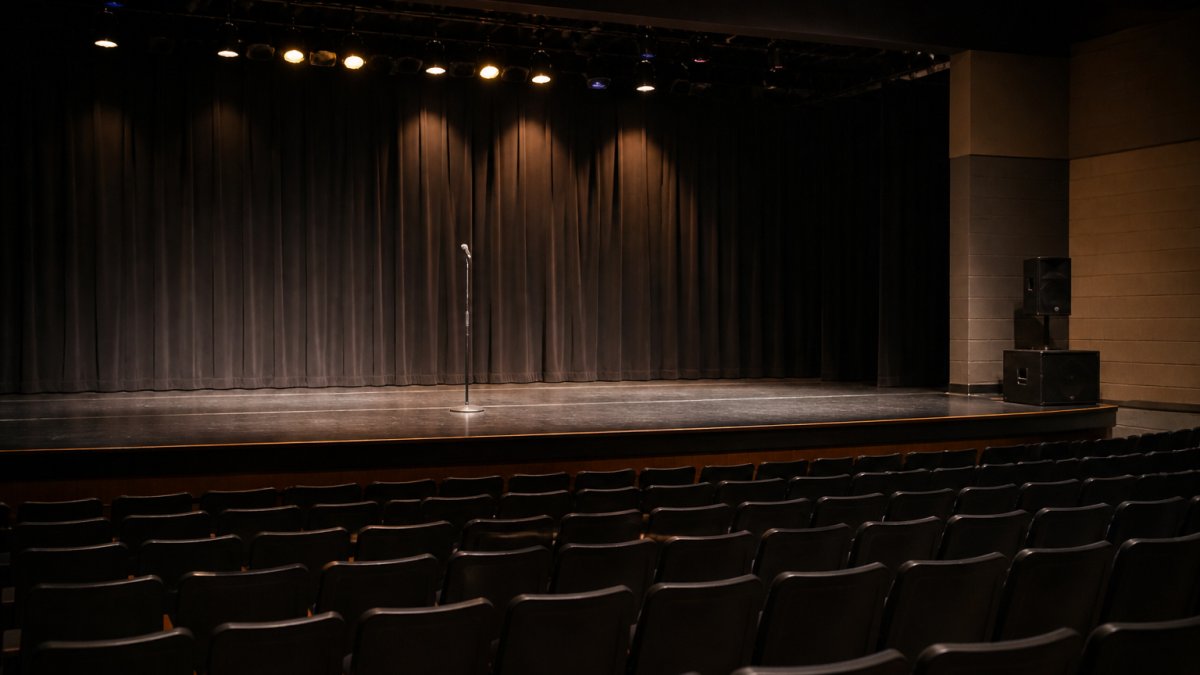
Most school auditoriums already have what a mentalism show needs: a stage, a working sound system, and basic lighting. The job is confirming the details before show day, not assuming them.
Stage Setup for Mentalism
Mentalism is quieter and more focused than a concert or pep rally, so stage layout matters more than square footage. Walk through this checklist with your performer:
- Performance area: Enough clear space for the performer and a small table or stand for props, plus room for two to four volunteers to stand comfortably without crowding.
- Prop table placement: A small table at stage left or right, positioned so the performer can reach it without turning their back on the audience for long.
- Volunteer seating: A plan for how volunteers get from their seats to the stage and back. Ask whether the performer prefers aisle seats reserved near the front or will pull volunteers from the audience in real time.
Ask what the performer brings versus what the school provides. Getting this in writing a week ahead prevents the classic show-day scramble.
Sound and Microphone Needs
A mentalism show lives and dies on clear audio. The audience needs to hear volunteer responses, the performer’s instructions, and the reactions that make the show fun.
- Microphone: A wireless handheld or lavalier microphone is ideal so the performer can move among volunteers. Confirm the school’s PA has a compatible input or that the performer brings their own sound reinforcement.
- Backup audio: Ask whether the performer carries a backup microphone or speaker. A dead battery or a bad cable can stall a show.
- Music cues: Many mentalists use short music cues for transitions. Ask whether the performer needs a way to play audio from a phone or laptop and whether the school’s system can accept it.
Lighting and Audience Visibility
Basic stage lighting is usually enough, but mentalism has one specific requirement: the audience must see faces and expressions, because much of the engagement comes from watching volunteers react.
- Face lighting: Ask for general stage wash that lights the performer and volunteers from the front, not just overhead spots that cast shadows.
- House lights: Confirm whether house lights stay partially up so the performer can see the audience and volunteers can find their way to the stage.
- No blackouts required: Most school mentalism acts do not need dramatic blackouts or special effects. If the performer requests anything unusual, ask why and whether it is essential.
Audience Size, Flow, and Phone Policy
Audience management is part of logistics, and it is where schools and performers most often miscommunicate.
- Audience size: Confirm the expected headcount so the performer can plan volunteer selection and projection. A show for 150 students in a cafeteria has different energy than 800 in an auditorium.
- Entry and exit flow: Staggered entry by grade or class helps the show start on time. Ask whether the performer prefers a full room before starting or can begin as students settle.
- Phone and recording policy: Decide in advance whether students may record the show. Many performers prefer phones away during volunteer segments to protect student privacy, and some schools have policies that require it. Put the decision in the pre-show announcement.
Send the performer a short logistics sheet two weeks out: stage dimensions, microphone type, audience size, start time, and the name and cell number of the on-site coordinator. A single page prevents most show-day surprises.
Coordinating With School Staff
Assign one on-site coordinator present for load-in, the performance, and load-out, with authority to make small decisions like adjusting the start time or moving a prop table. Confirm who handles door access, parking, and vendor security check-in, and share that with the performer in advance.
Questions to Ask a School Assembly Performer Before You Book
Booking a mentalist is not the same as booking a band or motivational speaker. The questions that matter are specific to how mentalism works, how it treats volunteers, and how the performer handles the ethical lines of an act built on suggestion, observation, and audience trust.
Use this as a working script. Ask for specifics, not reassurances, and ask for answers in writing where it counts.
Mentalism-Specific Vetting: What to Ask About the Act Itself
Start with how the performer describes their own material. A professional mentalist should explain, in plain language, what the audience will see and why it is appropriate for teenagers.
- What is the content rating of the show? Ask the performer to describe the tone in concrete terms: is it comedic, theatrical, mysterious, or a mix? Ask what topics are off-limits in their school version.
- How do you handle volunteers? A reputable mentalist will describe a clear consent process: asking for volunteers by raised hand, briefing them briefly before they come up, and giving them an easy, graceful way to step back. Ask what happens if a student freezes or says no on stage.
- Do you use planted audience members? This is a fair and important question. Many school buyers want to know whether anyone in the audience is working with the performer. Ask directly, and ask how the performer would describe the role of any assistants.
Checking School Experience and References
Experience in corporate events or theaters does not automatically translate to a high school assembly. The room, the attention span, and the stakes around student comfort are all different.
Ask for school references specifically, plus the name and role of the person who booked the show. When you call, ask three things: how students responded, how the performer handled the audience, and whether they would book the act again.
A few questions worth asking directly:
- How many school assemblies have you performed in the last two years, and at what audience sizes?
- Can you share references from schools with a similar grade range and auditorium size to ours?
- How do you adapt the show for a daytime assembly versus an evening event?
Contracts, Backup Plans, and Cancellation Terms
What happens if the performer gets sick the week of your event? Most coordinators forget this question until it matters, and it is especially important for a single-performer act with no understudy.
Ask about backup plans and cancellation terms in plain language.
Also confirm the business basics before you sign: a written agreement that names the date, run time, audience size, fee, and what the school provides.
Ask for the cancellation policy and certificate of insurance in writing before paying any deposit, and confirm who covers travel or setup costs if the date changes. Clarity up front protects both sides.
Red Flags That Should End the Conversation
Most performers are honest professionals, but a few warning signs are worth taking seriously. Be cautious if a performer cannot describe their show without vague hype, refuses to provide school references, pressures you to book immediately, or dismisses questions about student consent and content boundaries. A performer who cannot explain their opt-out process for volunteers is not ready for a high school stage.
Budget and Pricing Factors for Mentalism Shows
Pricing for a school mentalism show depends on several factors, so treat any single number with suspicion.
Pricing depends on quantity, dates, and delivery. For current pricing, reach out through Dusty Satterlee and we will walk you through options that fit your event.
A smaller school with a tighter budget is not priced out of a quality show. The conversation should start with your audience size, your date, and what you want students to walk away with, then build from there.
Planning Timeline: From Show Selection to Showtime
A workable planning timeline gives you room to vet performers, confirm logistics, and build excitement without a last-minute scramble. Most schools do best starting six to eight weeks out.
| Timeframe | Task | Who Owns It |
|---|---|---|
| 6-8 weeks out | Define budget, audience size, and date | Activities coordinator |
| 6 weeks out | Request quotes and check references | Coordinator |
| 4-5 weeks out | Book performer and confirm contract | Coordinator + admin |
| 3 weeks out | Confirm stage, sound, and lighting needs | Facilities + performer |
| 1-2 weeks out | Promote the assembly to students | Student council |
| Show week | Final logistics check and load-in plan | Coordinator + performer |
The schools that get the most from a mentalism show are the ones that treat it like any other event with a plan, not an afterthought squeezed between classes.
Frequently Asked Questions
Is mentalism appropriate for high school students?
Yes, when the performer designs the show for school audiences. A tasteful mentalism show for students avoids embarrassing volunteers, keeps content family-friendly, and focuses on wonder rather than fear. Ask the performer how they handle audience participation and whether they have performed at high schools before. Dusty Satterlee’s elegant style is built for student assemblies, with no pressure on volunteers and content that respects school community standards.
How long should a high school mentalism show be?
Most school assemblies run 45 to 60 minutes, which fits a typical mentalism show length without cutting into class time. A 45-minute show leaves room for a welcome and dismissal, while a 60-minute show allows more audience participation. Confirm the length when booking and ask whether the performer can adjust to your bell schedule. Shorter 30-minute versions work for pep rally slots.
Can a mentalism show work for a large student audience?
Yes. Mentalism relies on volunteers and clear stage presence rather than close-up props, so it scales well to auditoriums of 400 or more students. The key is a working microphone and a stage visible from every seat. Ask the performer about their experience with large crowds and whether they use a sound system. Dusty Satterlee regularly performs for high school audiences of this size.
What questions should schools ask before booking a mentalist?
Ask about experience with high school assembly entertainment, how volunteers are selected, what content is off-limits, show length, technical needs, and cancellation policy. Request references from other schools. Confirm the performer carries appropriate insurance and has a backup plan if they fall ill. These questions to ask a school assembly performer protect your event and help you compare options fairly.
Booking student entertainment is a real decision, and the wrong pick fades by Monday. If you want a show students actually talk about, Dusty Satterlee brings 15 years of experience, a tasteful and elegant performance style, and a background trained under veteran stage hypnotist Michael C. Anthony and at the Mike Mandell Hypnosis Academy. Get started with Dusty Satterlee and give your students an assembly they will remember.