
Last Updated: October 26, 2026
Quick Summary
Interactive entertainment is live programming that asks the audience to take part rather than just watch, and the best formats for corporate retreats are hosted game shows, audience-participation performances, hands-on workshops, and close-up mentalism. Match the format to your group size and retreat goal, then plan setup and transitions.
- Hosted game shows suit groups of 30 to 300 and run 45 to 90 minutes.
- Groups of 100 to 200 are the hardest to program and need strong audience participation.
- For a 60-minute hosted show, budget about 30 minutes for setup and 10 for a sound check.
- Book four to six months out for peak dates and large groups.
- Ask for an all-in number that includes travel, lodging, equipment rental, and venue AV charges.
Table of Contents
- Why Interactive Entertainment Belongs on Your Retreat Agenda
- Corporate Retreat Entertainment Ideas That Get Everyone Involved
- Corporate Team Building Activities That Fit Your Group Size
- Mentalism for Corporate Events: Close-Up Wonder Without the Pressure
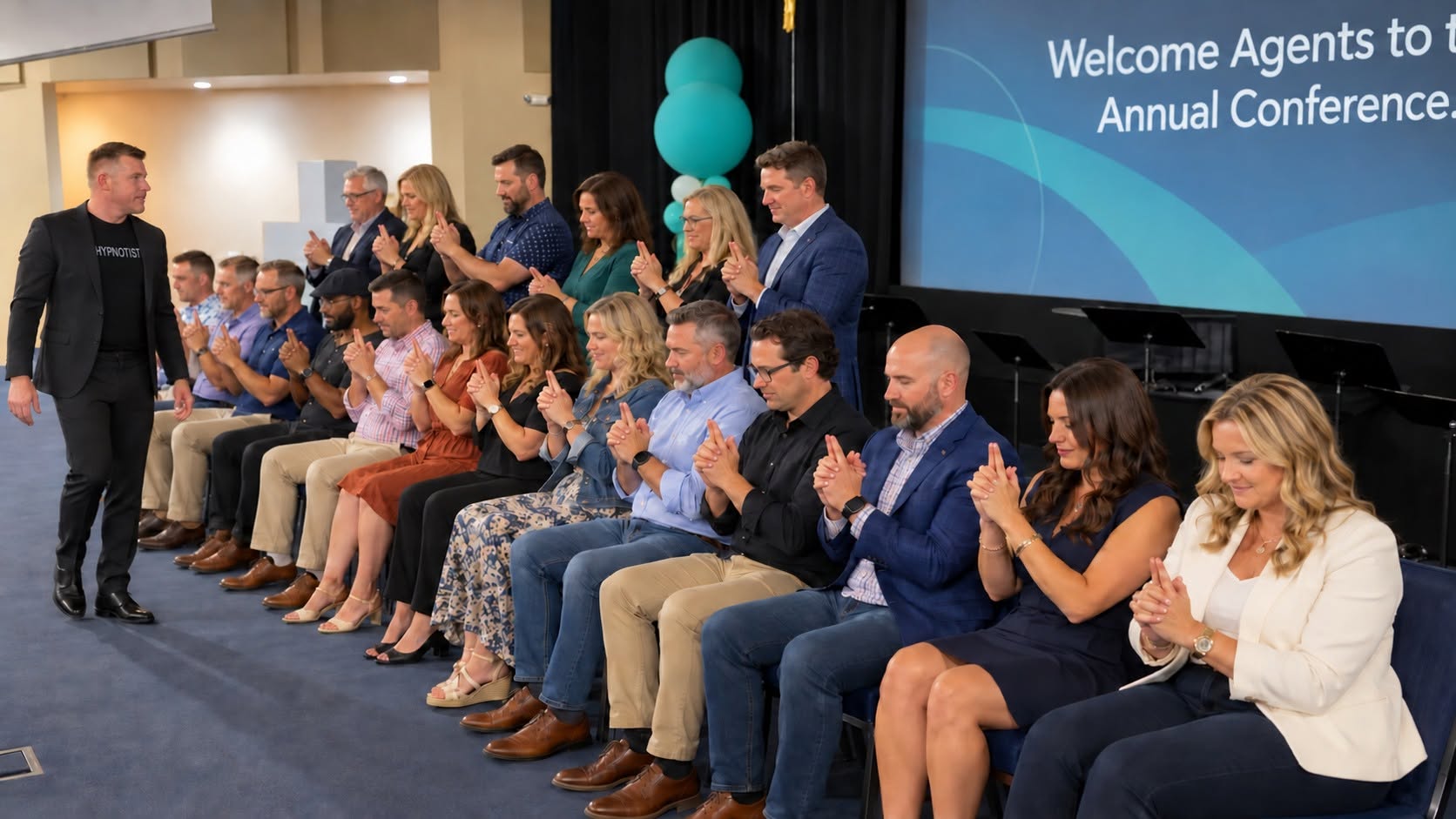
- Comedy Hypnosis for Corporate Events: A Tasteful, High-Energy Option
- Matching Entertainment to Your Retreat Objectives and Run-of-Show
- Budgeting, Accessibility, and Measuring Whether It Worked
- Booking Interactive Entertainment for Your Next Retreat
- Frequently Asked Questions
Why Interactive Entertainment Belongs on Your Retreat Agenda
Format matters more than budget. A retreat should mix people who rarely talk, reward the team, and send everyone home with a shared story.
Dusty Satterlee has spent more than 15 years performing comedy stage hypnosis and mentalism for corporate groups, high schools, and colleges.
Below: the formats that work, how to match them to your group size and goals, and how to plan the run-of-show.
Corporate Retreat Entertainment Ideas That Get Everyone Involved
The strongest corporate retreat entertainment ideas share one trait: they turn the audience into participants. Here are the formats that work most often.
Hosted Game Shows and Team Competitions
A hosted game show puts staff in teams, gives them silly but fair challenges, and lets a host keep the pace tight. Trivia nights, custom quizzes, and relay-style competitions all fit.
Team-building activities work best when the rules are easy and the stakes are low. Cornhole, mini golf, foosball, and pickleball tournaments give people a reason to cheer for coworkers they barely know.
- Best for: groups of 30 to 300
- Time needed: 45 to 90 minutes
- Why it works: built-in team competition and crowd participation
Live Performances With Audience Participation
Live music, a magic show, or a mentalism set can anchor an evening. The key word is participation. A performer who brings volunteers up front and reads the room creates a shared experience a DJ set cannot match.
Hands-On Workshops and Creative Sessions
Creative workshops, a hands-on cooking class, or a group art session give attendees something to do with their hands, suit smaller groups and quieter agendas, and produce something people can take home.
Corporate Team Building Activities That Fit Your Group Size
Group size should drive your choice more than anything else: a format that sings with 40 people can fall apart with 400.
| Group Size | Best Formats | Room and Logistics Notes | Watch Out For |
|---|---|---|---|
| Under 50 | Workshops, close-up mentalism, cooking classes, escape-room-style puzzles | One room with movable seating; a single facilitator can run the room | Formats that need a big crowd to feel alive; stations that leave half the group idle |
| 50 to 150 | Hosted game shows, trivia, team tournaments, improv sessions | Break into 6 to 12 teams; one central stage or focal point; a wireless mic per host | Too many small stations with no central focus; long team-forming transitions |
| 150 to 400 | Stage shows, comedy hypnosis, audience-participation performances, large-scale trivia | Stage at least 16 feet wide, clear sightlines, two handheld mics, a sound check before doors | Slow volunteer selection; long setup times; splitting the room into too many pieces |
| 400+ | Full stage productions with a strong host, multi-round competitions with a scoreboard | Professional AV, IMAG screens if the room is deep, a stage manager to run cues | Anything that requires herding the whole room between spaces mid-program |
Smaller groups often worry a headline performer is out of reach, but close-up mentalism scales down beautifully and a stage show scales up.
Groups of 100 to 200 are the hardest to program: too big for intimate formats, too small to feel like a stadium.
Match the Format to Participation Styles, Not Just Headcount
Headcount tells you what fits in the room; participation style tells you what fits the people. A retreat usually mixes eager volunteers, willing-but-shy attendees, and watchers from the back, build the agenda so all three have a good night.
- Volunteer-forward formats (game shows, comedy hypnosis, improv) reward extroverts and give the room a shared story. Keep volunteer selection voluntary and give people an easy way to decline.
- Observer-friendly formats (close-up mentalism during a reception, a headline stage show, live music) let quieter attendees participate by watching and reacting without being called up.
- Hands-on formats (workshops, cooking classes, puzzle challenges) suit people who prefer a task to a spotlight and work well when the group includes mixed mobility or sensory needs.
A common pattern: pair one volunteer-forward centerpiece with one observer-friendly option earlier in the evening, giving extroverts their moment and everyone else a comfortable on-ramp.
Plan the Transitions, Not Just the Activity
The activity is the easy part; transitions are where schedules slip. For a 60-minute hosted show, budget about 30 minutes for setup, 10 for a sound check, and 5 to 10 for volunteers to reach the stage and back.
If your venue has a hard dinner service or a room flip, put the entertainment on one side of it. A show that has to pause for a catering change loses more energy than a show that starts 15 minutes later than planned.
Walk the room before you book. Confirm sightlines from the back row, a clear path from the audience to the stage, and a power drop near the performance area. These three checks prevent most day-of surprises.
Mentalism for Corporate Events: Close-Up Wonder Without the Pressure
That matters at a retreat. Your people are already out of their comfort zones. Entertainment should reward them for showing up, not test their nerve.
Close-up mentalism works especially well during a cocktail hour or group dinner: small groups gather, the performer moves between them, and there is no stage, spotlight, or pressure.
- Best for: cocktail hours, dinners, smaller groups
- Vibe: elegant, curious, low-stress
- Participation level: voluntary and light
A common mistake is booking mentalism as the main event for a huge crowd.
Comedy Hypnosis for Corporate Events: A Tasteful, High-Energy Option
The word that matters is tasteful. Dusty Satterlee’s shows are built around willing volunteers and clean humor. Nobody is mocked, and nothing crosses a line.
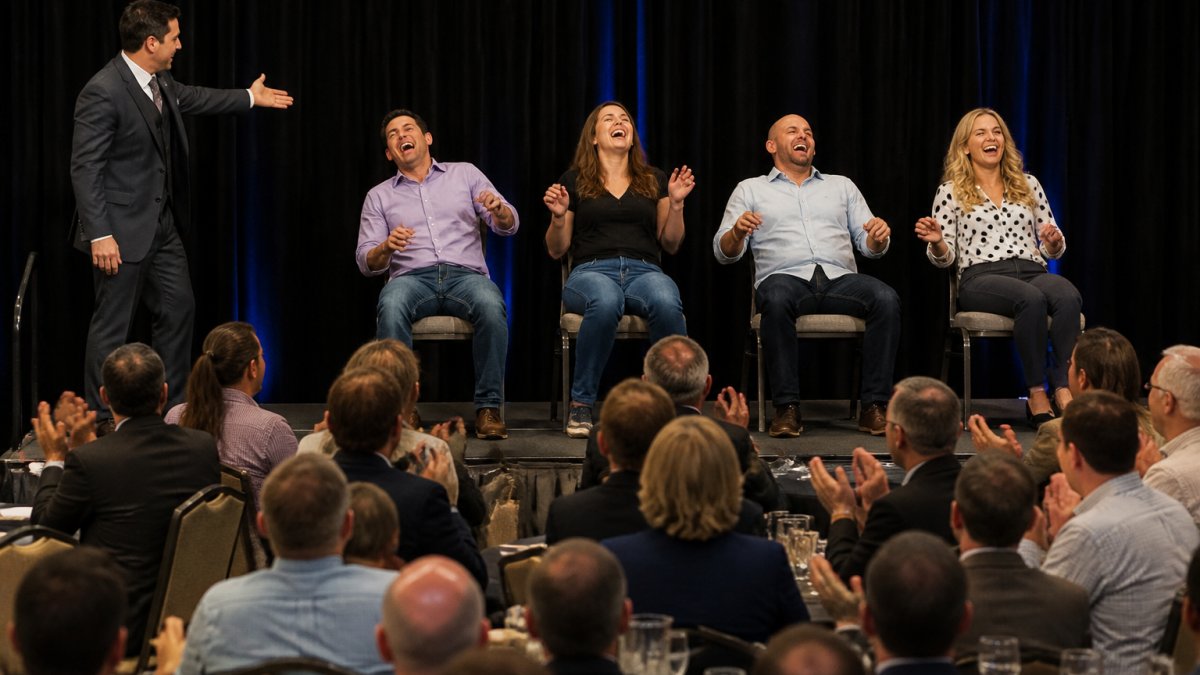
Watch out: hypnosis gets a bad reputation from performers who push volunteers too far. Ask any provider how they select volunteers and how they handle a guest who wants to stop.
Dusty’s training under veteran international stage hypnotist Michael C.
Matching Entertainment to Your Retreat Objectives and Run-of-Show
Start with the goal, then pick the format. That order saves money and prevents the classic mistake: booking a great act that has nothing to do with why you gathered.
- Goal: break down silos. Choose team competitions and hosted game shows.
- Goal: reward the team. Choose a headline stage show or live performance.
- Goal: spark creativity. Choose workshops and hands-on sessions.
Then build the run-of-show: a clear slot, a sound check, and a stage or floor plan.
Weather-proof your plan too. Outdoor activities like a scavenger hunt, hiking, or horseback riding are great until it rains. Keep an indoor backup ready.
Budgeting, Accessibility, and Measuring Whether It Worked
Most retreat guides stop at the idea. Planners get burned when they never priced it, never checked whether the room worked for every guest, and never agreed on what success looks like. This section closes that gap.
Budget: Know the Cost Drivers Before You Ask for a Quote
Pricing depends on the format, group size, date, and travel, so ask for a quote rather than guessing. But you can qualify options before the first call by understanding what moves the number.
- Format and duration. A workshop or close-up set generally costs less than a full stage production with AV and a larger crew. A 45-minute set and a 90-minute set are different products.
- Group size and room count. Large groups may need bigger sound, more mics, or a second performer for breakout rooms. Ask whether the quote covers one room or several.
- Travel and lodging. Out-of-town performers usually quote travel, lodging, and per diem separately. Get those line items in writing so the total cost of ownership is clear.
Ask for an all-in number, not a performance fee. The all-in number should include travel, lodging, equipment rental, and any venue AV charges. Comparing performance fees across providers is the fastest way to pick the wrong option.
Accessibility and Inclusion: Build the Plan Before the Room Is Set
Accessibility deserves a real plan, not an afterthought: every guest should be able to see, hear, and take part at the level they choose.
- Seating and sightlines. Reserve seats for guests who cannot stand for long periods, and confirm that the back row can see the stage or screen. For close-up formats, plan a seated option as well as a standing one.
- Hearing and language. Confirm a microphone for the host, captions or a transcript for any recorded or streamed content, and a plan for guests who use American Sign Language interpreters. Share any written materials in advance.
- Mobility and sensory needs. Check the path from seating to the stage, the location of restrooms, and whether the room has a quiet area guests can step into. Ask the performer how they adapt for different participation styles and whether they can lower the volume or lighting intensity.
Measuring Outcomes: Keep It Simple and Comparable
Measurement does not need a research budget. It needs a baseline and a follow-up. Pick two or three signals before the retreat and compare them to last year or to a pre-event survey.
- Survey attendees the next day on energy and enjoyment, using the same questions you used last year so the numbers are comparable
- Track how many volunteered versus watched, and note whether the split matched your plan
- Note how many people mention the show in follow-up chats, Slack channels, or the next all-hands
The signals are usually obvious. If people are still quoting the show at lunch the next day, it worked. If the room was quiet and the volunteers were the same five people, the format or the on-ramp needs adjusting next time.
Budget, accessibility, and measurement are the three places where a retreat entertainment plan either holds up or falls apart. Get the all-in number, build the inclusion plan, and pick your success signals before the event, not after.
Booking Interactive Entertainment for Your Next Retreat
Book early, ask the right questions, and lock the details in writing. Those three habits separate a smooth retreat from a stressful one.
Here is what we tell every planner who calls:
- Book four to six months out for peak dates and large groups.
- Ask for recent video of a full show, not just a highlight reel.
- Confirm the backup plan if the performer gets sick.
At Dusty Satterlee, a blend of world-class mentalism and comedy stage hypnosis is brought to every booking.
You can check availability and request a quote through our booking page. Tell us your date, group size, and goal, and we will recommend the format that fits.
Frequently Asked Questions
What are some interactive entertainment ideas for corporate retreats?
Hosted game shows, team competitions like cornhole or mini golf, live music with crowd participation, mentalism performances, comedy hypnosis, creative workshops, and photo or video activations all work well. The right pick depends on your agenda, group size, and whether you want people competing, creating, or simply watching. Mix one high-energy anchor activity with lighter options so different personality types have something to enjoy.
How long should entertainment at a corporate retreat last?
Most retreat entertainment works best in blocks of 30 to 60 minutes. A comedy hypnosis or mentalism show typically runs 45 to 60 minutes, while game shows and workshops can stretch to 90 minutes with breaks. Place the main entertainment after dinner or at the end of a strategy session, when energy tends to dip, and keep a shorter activity in reserve for the following morning.
How do you choose entertainment that works for different personality types?
Offer a mix of participation levels. Not everyone wants to be on stage, so pair a volunteer-driven show with passive options like a photo activation or audio guestbook. For corporate team building activities, use small-group formats where people can contribute without being singled out. Tell the entertainer your group’s culture in advance so they can dial audience involvement up or down.
Is comedy hypnosis appropriate for a corporate audience?
A professional stage hypnotist keeps the material tasteful and avoids anything that could embarrass a volunteer or clash with company culture. Ask about content style and audience screening before booking, and confirm the performer carries insurance and has worked with corporate groups. Dusty Satterlee’s performance style is built around elegant, tasteful participation, which suits retreats where colleagues and managers share a room.
Your retreat deserves entertainment people talk about on Monday, not forget by lunch. Dusty Satterlee offers a tasteful, high-energy blend of comedy hypnosis and mentalism, backed by 15 years of stage experience and training under veteran performers. Get started with Dusty Satterlee and give your team a night they will remember.
