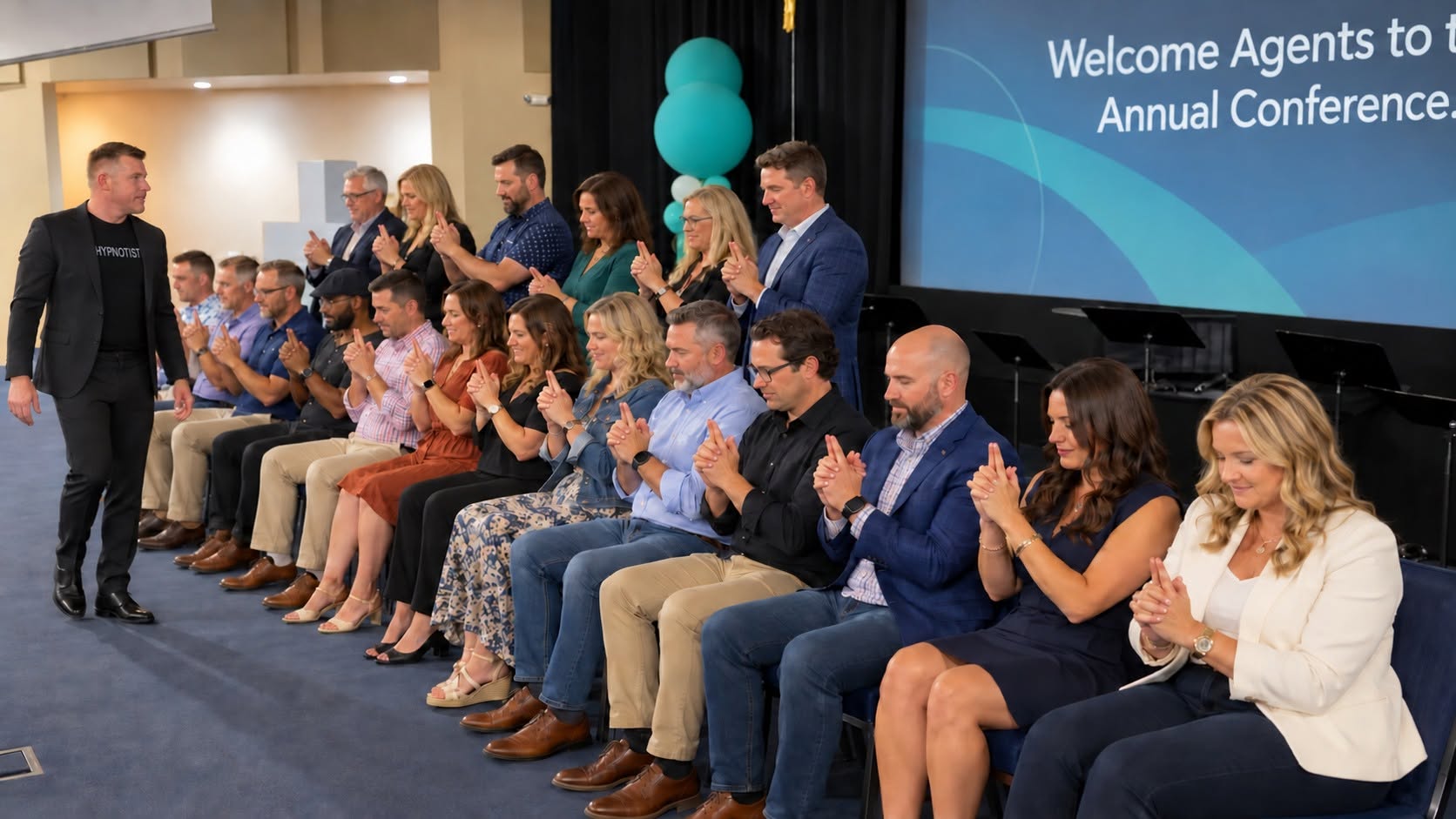

Last Updated: October 23, 2026
Quick Summary
Booking mentalists for company events means hiring a professional entertainer who performs mind-reading-style demonstrations, predictions, and interactive experiments for business audiences. Most corporate bookings are confirmed 30 to 60 days in advance, and the process runs from defining the slot and setting a budget through shortlisting performers, requesting an itemized quote, and confirming logistics two weeks out.
- A stage show fills a general session slot, while close-up mentalism works receptions and dinners without a stage.
- Corporate mentalist cost depends on show length, number of performers, travel, date, customization, and audience size.
- Ask for recent unedited performance footage rather than a highlight reel before you sign.
- Confirm load-in timing, microphones, and sightlines in writing two weeks before the event.
- Read cancellation, rescheduling, substitution, and payment terms closely before signing the contract.
Table of Contents
- Why Mentalists Work for Company Events
- Corporate Event Entertainment Ideas Beyond the Stage Show
- What Corporate Mentalist Cost Really Depends On
- Questions to Ask a Corporate Entertainer Before You Sign
- How to Compare Performers and Judge Real Quality
- A Step-by-Step Booking Process for Booking Mentalists
- Contracts, Contingencies, and Cancellation Planning
- Conclusion
- Frequently Asked Questions
Why Mentalists Work for Company Events
Booking mentalists for company events solves a problem most planners face around the third hour of a corporate gathering: the room goes quiet and the phones come out.
At Dusty Satterlee, we’ve spent more than 15 years watching audiences move from polite applause to genuine disbelief, and the pattern holds across ballrooms, auditoriums, and retreat halls.
The format also fits the way corporate events actually run.
What a Corporate Mentalist Actually Does
A corporate mentalist is a professional entertainer who performs mind-reading-style demonstrations, predictions, and interactive experiments for business audiences, typically blending stage presence with audience participation. The work is scripted, rehearsed, and built for a specific room and a specific crowd.
The performance usually includes a few recognizable elements:
- Predictions sealed before the show and opened by a guest on stage
- Audience members choosing words, numbers, or objects the performer then reveals
- Psychological demonstrations that explain how suggestion shapes decisions
What separates a strong corporate mentalist from a party trick is calibration. The material gets adjusted for the audience: a sales retreat gets sharper competitive framing, a student assembly gets cleaner humor, and a formal dinner gets a quieter, more elegant pace.
Events That Fit Mentalism Best
Corporate events, conferences, trade shows, retreats, and corporate dinners are the strongest fits for mentalism, because each one has a seated or gathered audience that needs a shared focal point.
Here’s how the fit breaks down by event type:
| Event Type | Best Format | Why It Fits |
|---|---|---|
| Conferences and conventions | 30-45 minute stage show | Gives a general session a memorable close |
| Trade shows | Close-up or booth work | Pulls foot traffic and starts conversations |
| Company retreats | Evening stage show | Builds shared experience across departments |
| Corporate dinners | Close-up table work | Keeps energy up between courses |
| Student assemblies | Full stage show | Holds a large, restless audience |
Conventions and conferences benefit most from a stage show placed before a keynote or at the end of a long day.

Corporate Event Entertainment Ideas Beyond the Stage Show
Corporate event entertainment ideas that work rarely stop at one performance. The strongest programs pair a main stage act with smaller interactive moments, so the energy carries through the whole evening instead of peaking for 40 minutes and dying.
Consider these combinations:
- Stage show plus close-up: a headline performance followed by table-by-table mentalism during dinner
- Interactive magic during cocktails: short, walk-around sets that break the ice before seating
- Audience-participation segments: guests invited on stage for a single experiment, which gives the room a story to retell
Guest interaction is the thread connecting all of these. When people are on their feet, talking to each other, and comparing what they just saw, the event stops feeling like a scheduled obligation.
The single highest-impact upgrade to a corporate entertainment budget is pairing a stage show with 30-45 minutes of close-up work during the reception. It costs less than adding a second headline act and keeps guests engaged during the exact window when they’d otherwise drift toward the bar.
What Corporate Mentalist Cost Really Depends On
Corporate mentalist cost depends on the length of the performance, the number of performers, travel distance, the date, and how much customization the act requires.
The variables that move the number most:
- Show length and format: a 30-minute stage show and a two-hour close-up engagement are different products
- Travel and event location: distance and overnight requirements add cost
- Date and season: peak corporate seasons and holiday parties command higher fees
We don’t publish fixed rates, because a school assembly for 400 students and a formal corporate dinner are not the same booking. The most reliable approach is to request a quote with your date, venue, audience size, and preferred format in hand, then compare that quote against what each performer includes.
The most common budgeting mistake is comparing headline fees without comparing what’s included. A lower quote that excludes travel, sound support, or a second performer can cost more than a higher quote that bundles them. Ask for an itemized breakdown before you sign anything.
Questions to Ask a Corporate Entertainer Before You Sign
The questions to ask a corporate entertainer before signing fall into four groups: content suitability, audience fit, logistics, and contingency. Asking them early saves a painful conversation later.
Run through this checklist before any contract goes to signature:
- Can you share recent, unedited performance footage rather than a highlight reel?
- How do you adapt material for a mixed or conservative audience?
- What technical requirements do you have, and who supplies them?
That first question matters more than any other. A highlight reel shows the best 90 seconds of a hundred shows.
The audience-suitability question deserves equal weight. If your student body or workforce is diverse, ask directly how the performer keeps comedy tasteful and avoids material that alienates part of the room.
How to Compare Performers and Judge Real Quality
Comparing performers comes down to evidence, not impressions. Reviews, references, full-length footage, and a clear contract separate professional entertainers from people who market well and deliver inconsistently.
Judge on these signals:
- Full-length footage over highlight reels. Anyone can cut 90 good seconds. Watch a full set to see pacing, audience handling, and how the performer recovers when a bit lands flat.
- References from your event type. A performer who is excellent at comedy clubs may be wrong for a corporate audience.
- Reviews that mention specifics. “Great show” tells you nothing. Reviews that name the format, the audience, and the outcome tell you a lot.
The thing nobody tells you about comparing acts is that the best ones will occasionally talk you out of a booking. If a performer tells you their show isn’t right for a seated awards dinner, that’s a strong signal they’ll be honest about everything else.
A Step-by-Step Booking Process for Booking Mentalists
Booking mentalists follows a predictable sequence, and starting early protects both your budget and your preferred date. Most corporate bookings are confirmed 30 to 60 days in advance, with larger conferences and holiday events often locked in earlier.
Here’s the process we recommend:
- Define the slot. Decide which part of the event needs entertainment, how long it should run, and whether guests will be seated or standing.
- Set a realistic budget range. Include travel and any technical support in the number, not just the headline fee.
- Shortlist three to five performers. Compare full-length footage and references from events like yours.
- Check availability for your preferred date. Ask about backup dates at the same time.
- Request a detailed quote. Ask for an itemized breakdown covering performance, travel, and equipment.
- Confirm the format and content. Agree on audience interaction level, tone, and any material to avoid.
- Sign the contract and pay the deposit. Get the cancellation and rescheduling terms in writing.
- Confirm logistics two weeks out. Reconfirm load-in time, room layout, sound, and a contact on site.
Last-minute bookings do happen, and some performers keep limited dates open. Availability shrinks fast in peak season, so if your date is fixed, start the conversation early.
Logistics, Tech, and Accessibility Checks
Logistics determine whether a great show lands or falls flat. Confirm the room layout, the sound setup, load-in access, and the timing of your other program items before the performer arrives.
Work through this list with your venue:
- Room and staging: what the performer needs for a stage show versus close-up work
- Sound: whether the venue supplies a microphone and operator, or the performer brings their own
- Load-in and setup time: how early the performer needs access to the room
Accessibility deserves early attention rather than a last-minute fix. If guests use wheelchairs or have hearing or vision needs, tell the performer and the venue in advance so the format can adapt.
The booking details that cause the most day-of problems are almost never the performance itself. They’re load-in timing, missing microphones, and seating that blocks sightlines. Confirm those three items in writing two weeks before the event.
Contracts, Contingencies, and Cancellation Planning
A contract protects both sides, and the clauses worth reading closely are cancellation, rescheduling, substitution, and payment terms. Ask about them before you sign, not after something goes wrong.
What to confirm in writing:
- Cancellation by the performer: what happens if illness or travel prevents the appearance, and whether a substitute is offered
- Cancellation by your organization: the notice period and any deposit terms
- Force majeure: how weather, venue closure, or other disruptions are handled
The backup question is the one planners ask most often, and it’s fair to ask it directly. A professional performer will have a plan for illness and travel disruption, and will tell you what it is.
Conclusion
The hardest part of corporate entertainment isn’t finding a performer. It’s finding one who reads your audience correctly, arrives prepared, and leaves people talking on Monday.
Dusty Satterlee brings more than 15 years of stage experience to corporate events, with a performance style built on tasteful, elegant mentalism and comedy stage hypnosis.
If your date is set, start the conversation now.
Frequently Asked Questions
How much does it cost to hire a mentalist for a company event?
Corporate mentalist cost varies with the length of the show, the size of the audience, travel distance, and whether you add a close-up mix-and-mingle set before the stage performance. A 45-minute keynote-style show for a few hundred guests is priced differently than a full evening with two performers. Rather than quoting a flat figure, reputable performers build a quote around your date, venue, and guest count. Ask for an itemized proposal so you can compare what each fee covers.
What does a mentalist actually do at a corporate event?
A corporate mentalist reads body language and uses suggestion, showmanship, and audience participation to create the illusion of mind reading. In a company setting, that usually means a stage show where volunteers from the audience think of words, draw pictures, or hide objects that the performer appears to reveal. Many performers also offer close-up entertainment during a reception or dinner, moving between tables so guests interact one-on-one. The format is interactive by design, which is why it holds attention better than a passive speech.
How far in advance should we book a mentalist?
Plan on 30 to 60 days in advance for most company events. Popular dates around the holidays, end of fiscal year, and conference season fill faster, so six months out is safer for large gatherings. Last-minute bookings are sometimes possible when a performer has an open date, but your choice of acts shrinks and customization time is limited. Confirm your preferred date early, then lock in the contract once your venue and guest count are settled.
Can a mentalist tailor the performance to our company or audience?
Yes, and you should expect it. A professional entertainer will ask about your company, your industry, the reason for the event, and any topics to avoid. Customized performance touches include referencing company milestones, weaving in inside jokes that stay tasteful, and choosing volunteer segments that suit a mixed audience. Share your guest demographics and any sensitivity concerns up front. If a performer cannot explain how they customize, that is a signal to keep comparing acts.
What questions should we ask a corporate entertainer before booking?
Ask about their experience with corporate audiences, what their show includes, how they handle audience volunteers who get nervous, and what technical setup they need. Request references from similar events and ask to see unedited footage, not just a highlight reel. Confirm travel fees, deposit terms, and the cancellation policy in writing. Also ask who covers sound equipment and whether they carry liability insurance, since your venue may require it. Clear answers to these questions separate professionals from hobbyists.
Is a mentalist a good fit for a company event?
It is a strong fit when you want audience engagement rather than a passive presentation. Mentalism works well for conferences, sales retreats, holiday parties, and client appreciation dinners because it gets guests interacting and gives them something to talk about afterward. It suits mixed audiences since the content stays clean and participatory. If your event is strictly formal or the room cannot support a stage and sound, a close-up set during the reception is a practical alternative.
